
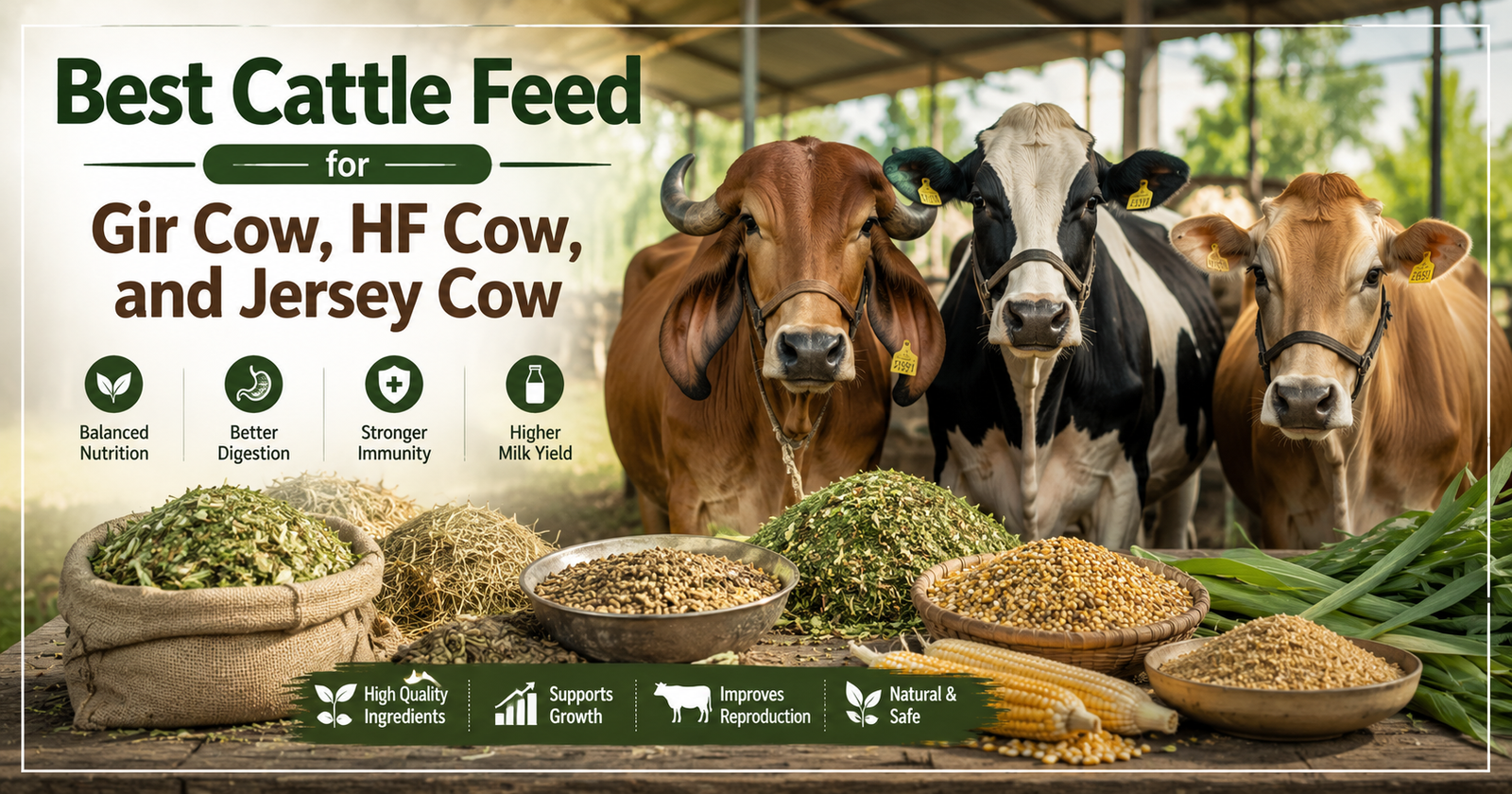
Best Cattle Feed for Gir Cow, HF Cow, and Jersey Cow
Posted on July 11, 2026
Every dairy farmer in India shares the same dream: keeping their cattle healthy, watching the milk container overflow every morning, and hitting that perfect fat and SNF (Solids-Not-Fat) percentage that fetches the highest price at the dairy cooperative.
But here is the catch – if you feed a high-yielding Holstein Friesian (HF) cow the same diet as a resilient indigenous Gir cow, you are setting yourself up for financial loss. One might drop its milk production drastically, while the other might end up facing severe health issues like metabolic bloat or acidosis.
Cattle feeding is not a “one-size-fits-all” game. Every breed has a unique genetic makeup, body weight, and metabolic rate. Understanding the exact nutritional demands of India’s big three (the Gir, the HF, and the Jersey) is the secret to maximizing milk profits while keeping vet bills at zero.
The Golden Pillars of Indian Cattle Feed
Before breaking down specific diets by breed, every successful dairy farmer must understand what goes into a balanced Total Mixed Ration (TMR). The standard thumb rule followed across commercial Indian farms divides daily intake into four key parts:
- Green Fodder (60-70% of roughage): Provides essential vitamins, moisture, and highly digestible fiber. Think Super Napier, Berseem, Co-4/Co-5 grass, or Maize silage.
- Dry Fodder (30-40% of roughage): Crucial for maintaining rumen health and ensuring proper chewing (rumination), which directly boosts milk fat. Examples include Wheat straw (Bhusa) and Paddy straw.
- Concentrate Feed (Pashu Aahar): The powerhouse mixture of grains (Maize, Barley), oil cakes (Mustard, Cottonseed cake), and brans (Wheat bran, Rice polish) that fuels actual milk volume.
- Mineral Mixture & Supplements: The micronutrients (Calcium, Phosphorus, Zinc) are necessary for timely conception and skeletal strength.
1. The Ultimate Diet Plan for a Gir Cow
The Gir cow is India’s indigenous pride. Known for producing premium A2 milk, this breed is incredibly hardy, heat-tolerant, and disease-resistant. However, because their metabolism is different (from European breeds, overfeeding them high-energy concentrates will only make them fat rather than increasing milk production).
Nutritional Strategy
Gir cows thrive exceptionally well on high-quality roughage. They need a balanced diet that prioritizes natural grazing or high-quality green fodder, supplemented with a moderate, steady dose of concentrate feed during their milking cycle.
Recommended Daily Feed Formulation (For an average 350-400 kg Gir cow yielding 8–12 liters/day)
| Feed Type | Recommended Component | Daily Quantity |
| Green Fodder | Cultivated Maize, Jowar, or Hybrid Napier | 20 to 25 kg |
| Dry Fodder | Quality Wheat Straw (Bhusa) or Groundnut Gotar | 4 to 5 kg |
| Concentrate | BIS Type-II Compound Feed (or Mustard/Cottonseed cake mix) | 4 to 5 kg |
| Supplements | High-grade Mineral Mixture + 30g Common Salt | 80 to 100 grams |
Pro-Tip for Gir Cows: To boost the fat content of A2 milk, incorporate cottonseed cake (Binola Khal) or mustard cake into their concentrate mix. Always soak the dry concentrate in water for a few hours before feeding to improve digestibility.
2. The Ultimate Diet Plan for an HF (Holstein Friesian) Cow
The HF cow is the undisputed heavyweight champion of milk volume. Weighing anywhere between 550-650 kg, these heavy crossbreeds or exotic cows can pump out 25 to 40+ liters of milk daily.
But remember: high production requires high maintenance. Their large bodies work like high-speed factories, making them extremely vulnerable to heat stress and digestive disorders if their nutrition slips even a fraction.
Nutritional Strategy
HF cows need massive amounts of Dry Matter Intake (DMI). Because they produce so much milk, they cannot get enough energy from grass alone. During early lactation, they need more concentrate feed, high-energy silage, and bypass fat. This helps maintain their body weight and supports better milk production.
Recommended Daily Feed Formulation (For a 550-600 kg HF cow yielding 25–30 liters/day)
| Feed Type | Recommended Component | Daily Quantity |
| Green Fodder / Silage | High-energy Maize Silage + Fresh Berseem/Napier | 30 to 35 kg |
| Dry Fodder | Clean Wheat Straw or Lucerne Hay | 4 to 5 kg |
| Concentrate | High-Protein BIS Type-I Pellet Feed + Grains | 10 to 12 kg (Rule: 1 kg per 2.5L milk + 1 kg baseline) |
| Special Additives | Bypass Fat (100g), Toxin Binder, Mineral Mixture | 150 to 200 grams |
Warning for HF Owners: Because HF cows eat huge amounts of grains/concentrates, they are highly prone to Rumen Acidosis (stomach acidity). Always mix their green fodder, dry straw, and pellets thoroughly as a Total Mixed Ration (TMR) rather than feeding concentrates separately. Adding 30-50 grams of sodium bicarbonate (cooking soda) to their daily feed works wonders in neutralizing stomach acid.
3. The Ultimate Diet Plan for a Jersey Cow
If you want the best of both worlds—high milk production and exceptionally high fat/SNF percentages—the Jersey cow is your go-to breed. More compact and heat-tolerant than the giant HF cow, the Jersey is an incredibly efficient converter of feed into high-value, creamy milk.
Nutritional Strategy
Jersey cows have a smaller body frame (~400 kg) but high metabolic output. They require a tightly balanced protein-to-energy ratio. Because their milk contains high levels of fat and calcium, they need proper mineral supplementation. This helps reduce the risk of post-calving problems such as milk fever.
Recommended Daily Feed Formulation (For a 400-450 kg Jersey cow yielding 15–20 liters/day)
| Feed Type | Recommended Component | Daily Quantity |
| Green Fodder | Leguminous crops (Lucerne, Berseem) + Hybrid Napier | 25 to 30 kg |
| Dry Fodder | Paddy Straw or Wheat Straw | 3 to 4 kg |
| Concentrate | Balanced Compound Cattle Feed (Type I or II) | 7 to 8 kg (Rule: 1 kg per 2.5L milk) |
| Supplements | Calcium ionic gels (post-calving) + Mineral Mixture | 100 to 120 grams |
Common Feeding Mistakes to Avoid on Your Dairy Farm
- Sudden Diet Swaps: Never change your cattle’s feed layout overnight. If you want to switch from mustard cake to cottonseed cake, or shift to a new brand of pellet feed, transition slowly over 7 to 10 days by mixing the old and new feeds. Sudden shifts destroy the helpful microbes in the cow’s stomach.
- Ignoring Clean Water Availability: Milk is roughly 87% water. An HF cow producing 30 liters of milk needs to drink close to 100 liters of clean, cool water every single day. If water access is restricted, milk yield drops instantly, no matter how expensive your feed is.
- Using Moldy Fodder or Silage: Damp weather or poor storage can cause fungus to grow on dry straw and silage. Feeding moldy material introduces dangerous mycotoxins into the cow’s system, leading to sudden drops in immunity, abortion in pregnant cattle, and severe liver damage.
Conclusion:
Feeding your cattle scientifically is the fastest way to turn your dairy farm into a highly profitable enterprise. Keep your native Gir cows on a fiber-rich, clean green diet to extract premium (A2) quality. Shield your high-yielding HF cows with structural TMR and anti-acidity buffers to maintain peak performance, and fuel your compact Jersey cows with high-calcium, balanced concentrates for that top-tier milk fat pricing.