
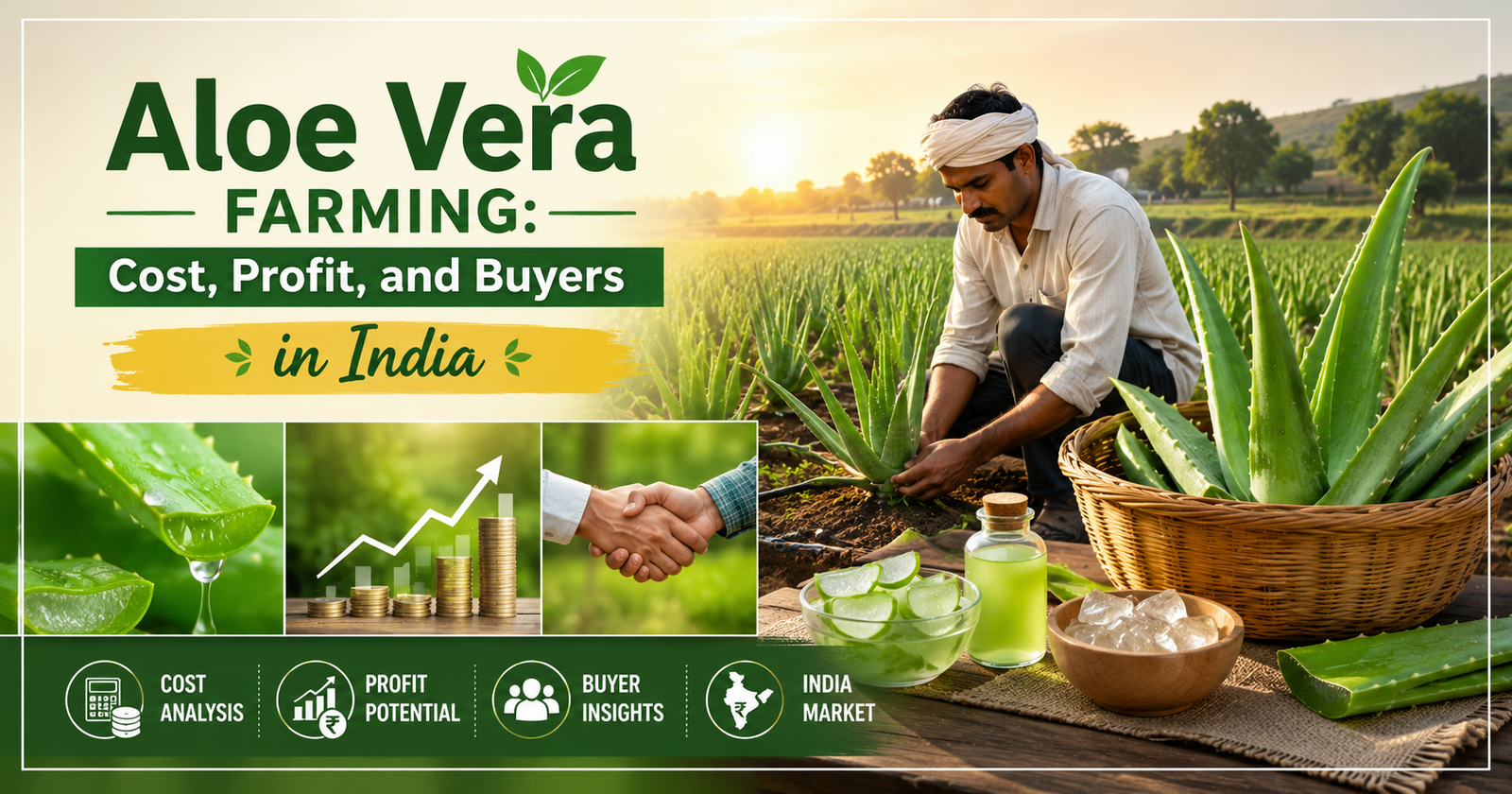
Aloe Vera Farming: Cost, Profit, and Buyers in India
Posted on June 12, 2026
The hot, dry wind across India’s arid belts usually brings nothing but dust and empty pockets. For generations, farmers in these regions spent decades fighting failed rains and dying groundnut crops. The cracked earth felt like an enemy, following the same heartbreaking pattern every season: investment in seeds, soaring water bills for tube wells, and a harvest that barely covered input debts.
Then came a shift in perspective. Instead of traditional wilting crops, forward-thinking growers noticed rows of thick, fleshy, spikey green plants standing proud against the blazing sun. It was Aloe barbadensis miller (commonly known as Aloe Vera).
The underlying lesson was simple: stop begging the skies for water, plant a crop that thrives on neglect, and let the booming beauty and wellness industries drive your agricultural returns. Today, these formerly barren lands are turning into thriving green enterprises. For growers looking to escape the cycles of climate risk, Aloe Vera farming in India has emerged as one of the most profitable, low-maintenance, and climate-resilient agribusinesses of the decade.
Chapter 1: Planting the Green Gold (The Setup)
Transitioning to this crop requires careful planning. While Aloe Vera is incredibly tough, a successful Aloe Vera commercial cultivation project demands a smart infrastructure blueprint.
The Soil and Climate Checklist
Aloe Vera hates wet feet. The plant is a succulent, meaning its leaves store water. If the roots sit in waterlogged soil for more than a few days, they rot, and the crop is ruined. Sandy, well-drained, semi-arid soil (which often fails traditional crops) is actually the perfect paradise for Aloe Vera. The plant requires ample sunlight and thrives in temperatures ranging from 10°C to 45°C.
Sourcing the Right Baby Plants (Suckers)
Instead of seeds, Aloe Vera is grown using Aloe Vera suckers—the baby offshoots that sprout from the base of a mature mother plant. High-yield medicinal varieties (like Aloe chinensis or Aloe indica, which are high in gel content) should be sourced directly from certified government nurseries or trusted agritech suppliers.
Preparing a one-acre field requires a basic mix of organic manure or cow dung, bypassing expensive chemical fertilizers entirely. To optimize space, field layouts typically accommodate roughly 10,000 to 12,000 suckers per acre using a disciplined grid spacing of 2 feet by 1.5 feet. This gives the plants plenty of room to spread their heavy leaves.
Chapter 2: The Math Behind the Mud (Cost vs. Investment)
Reviewing the farm ledger reveals the unique financial appeal of an Aloe Vera farm investment. The cost structure is highly front-loaded: you pay a significant amount in Year 1, and then operational expenses almost completely drop for the next five years.
Once planted, a single Aloe Vera root system lives and produces high-quality leaves for 3 to 5 years. Farmers do not need to buy new seeds or replant every single season.
The typical cost breakdown for the first acre of cultivation follows this trajectory:
Year 1: The Initial Capital Outlay
- Land Preparation & Organic Manure: ₹15,000 (Ploughing and adding baseline manure)
- Cost of Suckers: ₹35,000 to ₹40,000 (Buying 10,000 premium suckers at roughly ₹3.5 to ₹4 per piece)
- Planting Labour: ₹8,000, which includes the cost of hiring local workers to place and plant in the field.
- Drip Irrigation Setup: ₹25,000 (An optional but highly recommended step that slashes water use by 80% and qualifies for major government subsidies)
- Total Initial Cost: ~₹85,000 to ₹90,000 per acre
Year 2 to Year 5: The Maintenance Phase
Once the field is established, operational expenses plummet. Aloe Vera is a natural repellent to stray cattle, goats, and wild animals because of its bitter taste, eliminating the need for expensive security fencing. Furthermore, it suffers from almost zero major pest attacks.
- Annual Maintenance (Weeding and minimal watering): Only ₹15,000 to ₹20,000 per year.
Chapter 3: Reaping the Gel (Yield and Profitability)
For the first 10 to 12 months, the primary job is simply monitoring the field as the plants grow thick and juicy. By the end of the first year, the bottom leaves become over a foot long, heavy with translucent, nutrient-dense gel.
The Harvest Cycle
Aloe Vera is not a one-time harvest crop. Workers do not cut the entire plant. Instead, they carefully slice away 3 to 4 outer leaves from each plant every three to four months. This means an Aloe Vera farm provides the business with a steady, recurring income 3 to 4 times a year.
The Profit Calculation
A single well-managed acre can harvest roughly 15 to 20 tonnes of fresh Aloe Vera leaves per year.
In the wholesale Indian market, depending on the thickness and gel quality, fresh leaves sell anywhere between ₹5,000 and ₹8,000 per tonne.
- Gross Annual Revenue: 20 tonnes × ₹6,000 = ₹1,200,000 per acre
- Net Profit (After Year 1 costs): Easily ₹1,00,000 to ₹1,30,000 per acre annually.
When scaled up to a 5-acre operation, net annual profits can cross ₹5 Lakhs. This level of income can be much higher than traditional grain farming in dry regions, while requiring far less water.
Chapter 4: The Core Challenge (Where to Sell?)
Traditional vegetable mandis do not accept Aloe Vera. Securing commercial buyers before planting is the most vital step in the entire journey. Fortunately, global demand for organic aloe vera gel is growing strongly, especially in cosmetics, skincare, and health drinks. India has become an important manufacturing hub for aloe vera products, creating better opportunities for farmers and processors.
Successful farms crack the market using three distinct avenues:
-
The FMCG and Ayurvedic Giants
The largest consumers of raw leaves are major wellness and pharmaceutical companies. Brands like Patanjali Ayurved, Dabur, Baidyanath, Emami, and Himalaya Wellness procure massive tonnages of leaves for their gels, juices, and shampoos. Farmers can register as approved vendors or supply through regional aggregation agents.
-
Direct-to-Consumer Contract Farming
The safest way to enter the market is through contract farming for Aloe Vera. Several agritech firms and regional processing labs sign a legal agreement with farmers before planting begins. They supply the initial suckers and guarantee a fixed price (e.g., binding themselves to buy the harvest at a guaranteed minimum rate per kg), protecting the farm from unexpected market price drops.
-
Setting Up a Mini-Processing Unit (The Ultimate Scale-Up)
To maximize returns, groups of farmers often pool profits to buy a simple, low-cost Aloe Vera gel extraction machine for around ₹2.5 Lakhs. Instead of transporting heavy, bulky raw leaves (which incurs high shipping costs), they extract the pure gel on-site, stabilize it, and sell the concentrated liquid directly to local cosmetic startups. This strategic move can double profit margins overnight.
The Master Matrix: Aloe Vera Farming at a Glance
| Parameter | Details & Metrics |
| Initial Investment (Acre) | ₹85,000 – ₹95,000 (Includes suckers & land prep) |
| Suckers Needed per Acre | 10,000 – 12,000 plants |
| Water Requirement | Very Low (Thrives on drip irrigation / rain-fed) |
| Maturity Period | 10 to 12 months for the first harvest |
| Harvest Frequency | Every 3 to 4 months (Rolling income) |
| Average Annual Yield | 15 – 20 Tonnes per acre |
| Market Price (Raw Leaves) | ₹5,000 – ₹8,000 per Tonne |
| Key Target Buyers | Patanjali, Dabur, Cosmetic Labs, Herbal Exporters |
Epilogue: The Future Belongs to the Resilient
Agriculture in modern India is changing. With shifting weather patterns and falling water tables, commercial survival requires constant innovation. Aloe Vera is more than just a plant that yields healing gel; for thousands of growers across the country’s dry belts, it represents a reliable shield against drought and a direct ticket to long-term commercial success.