
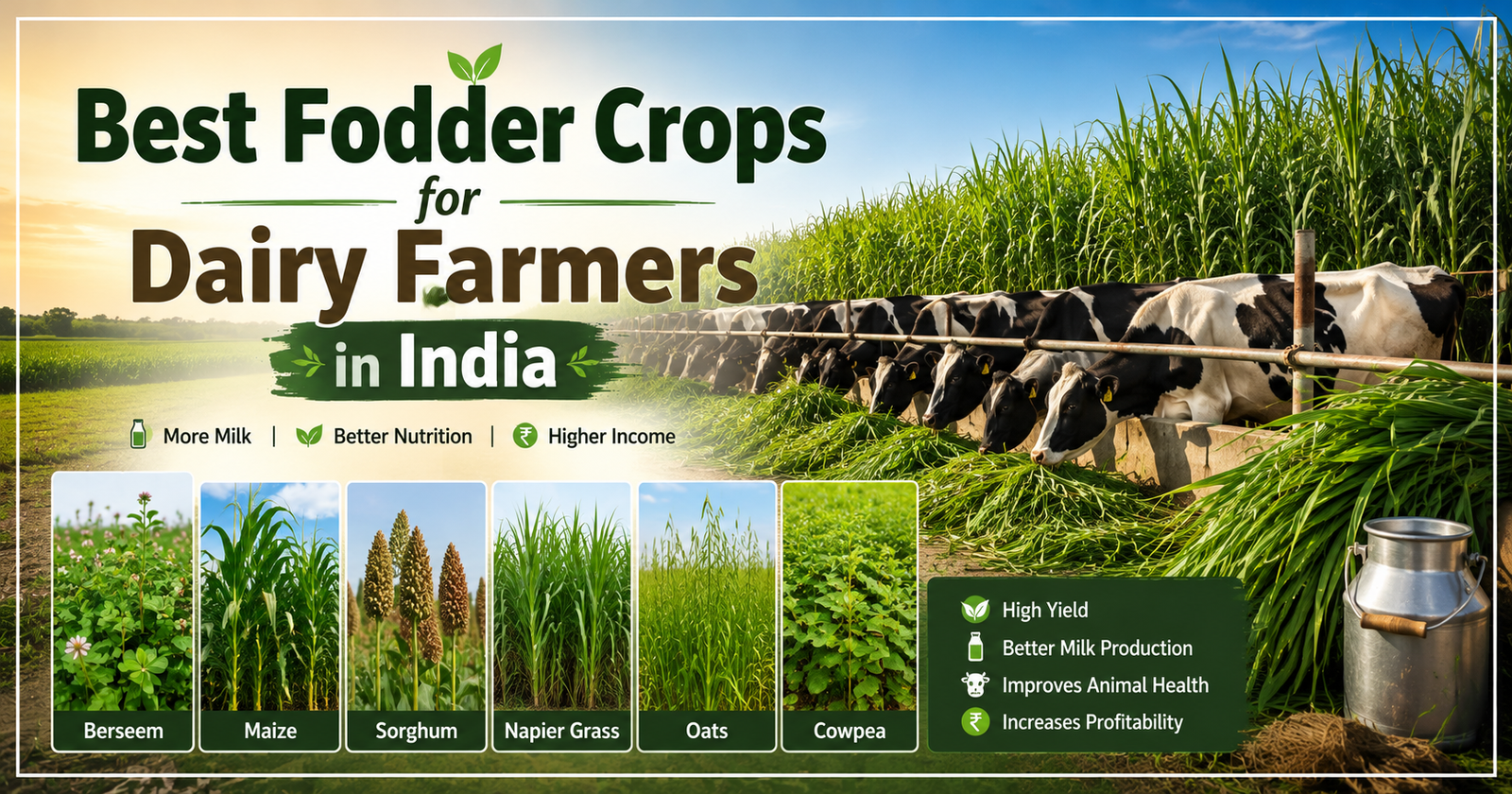
Best Fodder Crops for Dairy Farmers in India
Posted on June 8, 2026
Every morning before sunrise, a dairy farmer knows the real condition of the farm before anyone else does. The buffalo may look healthy, the cow may stand quietly near the shed, and the milk can may be ready near the door, but the truth often appears in one simple question: “What will they eat today?”
For many dairy farmers in India, milk production is not only about breed, medicine, or milking time. It begins much earlier, in the fodder field. A cow that receives fresh, nutritious green fodder gives better milk, stays healthier, and depends less on costly market feed. On the other hand, when fodder is poor, irregular, or dry for too long, the animal shows it through lower milk yield, weak body condition, and reduced fertility.
This is why choosing the best fodder crops for dairy farmers in India is not a small decision. It is a daily business decision, a health decision, and sometimes, the difference between profit and struggle.
Why Fodder Matters in Dairy Farming
In Indian dairy farming, many farmers spend heavily on cattle feed, oil cakes, minerals, and concentrates. These inputs are important, but they cannot replace good green fodder. Green fodder provides moisture, fibre, energy, protein, and natural nutrients that support digestion and milk production.
A dairy animal does not need only a full stomach. It needs balanced nutrition. If the ration has too much dry straw and very little green fodder, the animal may survive, but it may not perform well. That is why smart dairy farmers think of fodder crops as the foundation of their milk business.
The best approach is not to depend on a single crop only. India has different seasons, soils, and rainfall patterns. A farmer in Gujarat may need a different fodder plan from a farmer in Punjab, Karnataka, Maharashtra, or Uttar Pradesh. The goal should be simple: plan green fodder availability throughout the year.
Maize: The Reliable Fodder Crop for Energy
Fodder maize is one of the most dependable green fodder crops for dairy farmers in India. It grows quickly, produces good biomass, and is highly palatable, making it a preferred feed for both cattle and buffalo.
Farmers often prefer maize because animals eat it happily. It is also useful for silage making, especially when farmers want to store fodder for the dry season. For dairy farmers with more animals, maize silage can become a practical solution when green fodder is not easily available.
Fodder maize is especially useful during the summer and kharif seasons. When harvested at the right stage, it provides good energy and digestible nutrients. For farmers who want a crop that supports milk production and can also be stored, maize is one of the best fodder crops for dairy cows and buffaloes.
Sorghum: The Strong Crop for Indian Conditions
Sorghum, commonly known as jowar, is another important fodder crop in India. It is valued because it grows well in warm climates and can perform better than many other fodder crops in areas with limited water availability.
For farmers looking for high-yield fodder crops, sorghum is a practical option. It produces good green matter and can be used as fresh fodder. Farmers should harvest sorghum at the right stage because very young plants may contain harmful compounds that can affect animal health. It is always better to follow local agricultural guidance for safe cutting time.
Sorghum works well for farmers who need bulk fodder and want a crop that can handle Indian field conditions. In many dairy belts, jowar fodder remains a common choice because it balances yield, adaptability, and animal acceptance.
Hybrid Napier: The Everyday Green Fodder Machine
Some crops feel like seasonal guests, but hybrid Napier feels like a permanent member of the farm. Once established, hybrid Napier or Bajra-Napier grass can provide repeated cuts, making it one of the most useful perennial fodder crops for dairy farmers in India.
For a farmer with limited land, hybrid Napier can be a strong choice because it gives high green fodder yield from a smaller area when managed properly. Regular irrigation, manure, and timely cutting can keep the crop productive for a long time.
Many dairy farmers like hybrid Napier because it reduces daily fodder stress. Instead of asking every few weeks what to sow next, they can maintain a small but productive fodder plot. For small and medium dairy farms, this crop can become the backbone of a year-round green fodder supply.
Berseem: The Winter Protein Support
When winter arrives in North India and many parts of the country, berseem becomes one of the most loved fodder crops. It is soft, leafy, nutritious, and rich in protein. Animals usually like it, and dairy farmers value it because it supports better milk production during the winter season.
Berseem is especially important because it is a leguminous fodder crop. This means it helps add protein to the animal ration and can also support soil fertility. For dairy animals that are producing milk, protein-rich green fodder is very important.
Farmers in states such as Punjab, Haryana, Uttar Pradesh, Rajasthan, Madhya Pradesh, and Gujarat often grow berseem during the rabi season. Direct selling works best when farmers can maintain quality, harvest on time, pack the produce properly, and communicate regularly with buyers.
Lucerne: The Premium Fodder for Quality Nutrition
Lucerne, also known as alfalfa, is another excellent leguminous fodder crop. It is often called a high-quality fodder because it contains good protein and supports the nutritional needs of dairy animals.
Lucerne is suitable for farmers who can manage irrigation and want a nutritious fodder source for milch animals. It can provide multiple cuts and is especially useful for farms focused on quality milk production.
However, like all good crops, lucerne needs care. Soil condition, water management, and proper cutting are important. When managed well, lucerne can be a valuable part of a dairy fodder plan, especially for farmers who want to reduce dependence on expensive protein feed.
Cowpea: The Quick Green Fodder Option
Cowpea, also called lobia in many regions, is a short-duration legume fodder crop. It grows quickly and can be useful when farmers need green fodder within a shorter time.
Cowpea is rich in protein and can be grown as a sole crop or mixed with cereal fodder crops. When mixed with maize, sorghum, or bajra, it helps improve the protein level of the fodder. This combination is useful because cereal fodder provides energy and volume, while legume fodder adds more protein and improves the overall nutritional value of the feed.
For dairy farmers who face seasonal fodder gaps, cowpea can be a smart crop. It is also suitable for improving ration balance, especially when animals are getting mostly dry fodder or cereal-based fodder.
Oats: A Good Rabi Fodder Crop
Oats are another useful winter fodder crop, especially in cooler regions and irrigated areas. Oat fodder is soft, palatable, and suitable for dairy animals. It can be grown during the rabi season and helps maintain green fodder availability when summer crops are not present.
For farmers who already grow berseem, oats can be used as an additional option. It gives good biomass and can be included in a seasonal fodder rotation. In areas where dairy farming is more organized, oats are often part of a planned green fodder system.
Fodder Bajra: A Practical Choice for Dry Regions
Pearl millet, commonly known as bajra, is widely grown in India and can also be used as fodder. It performs well in dry and semi-arid regions, making it useful for farmers who cannot depend on heavy irrigation.
Fodder bajra provides green biomass and is suitable for the kharif season. It can be a practical choice in Rajasthan, Gujarat, Haryana, and parts of Maharashtra, where heat and limited water are common challenges.
For dairy farmers in such regions, bajra fodder can reduce pressure on purchased feed and support animals during difficult months.
Building a Year-Round Fodder Plan
The most successful dairy farmers do not ask, “Which is the single best fodder crop?” They ask, “Which combination will feed my animals throughout the year?”
A strong fodder plan may include maize or sorghum for bulk, hybrid Napier for regular cutting, berseem or lucerne for protein, cowpea for short-duration nutrition, and oats for winter support. Farmers with extra maize can also prepare silage, which becomes valuable during summer, drought, or rainy days when fresh cutting is difficult.
This kind of planning turns fodder from a daily headache into a farm system. It helps reduce feed costs, protect milk production, and give animals a healthier diet.
Final Thoughts
Behind every litre of milk, there is a field. Sometimes that field is maize, sometimes berseem, sometimes hybrid Napier, and sometimes a small patch of cowpea, saving the farmer during a difficult season.
For dairy farmers in India, a good fodder crop is not judged by yield alone. Its nutrition, water, cost, and impact on milk production are equally important. A good dairy farmer plans fodder carefully because healthy feed is just as important as proper animal care.
Because in dairy farming, milk does not begin in the bucket. It begins in the soil.