
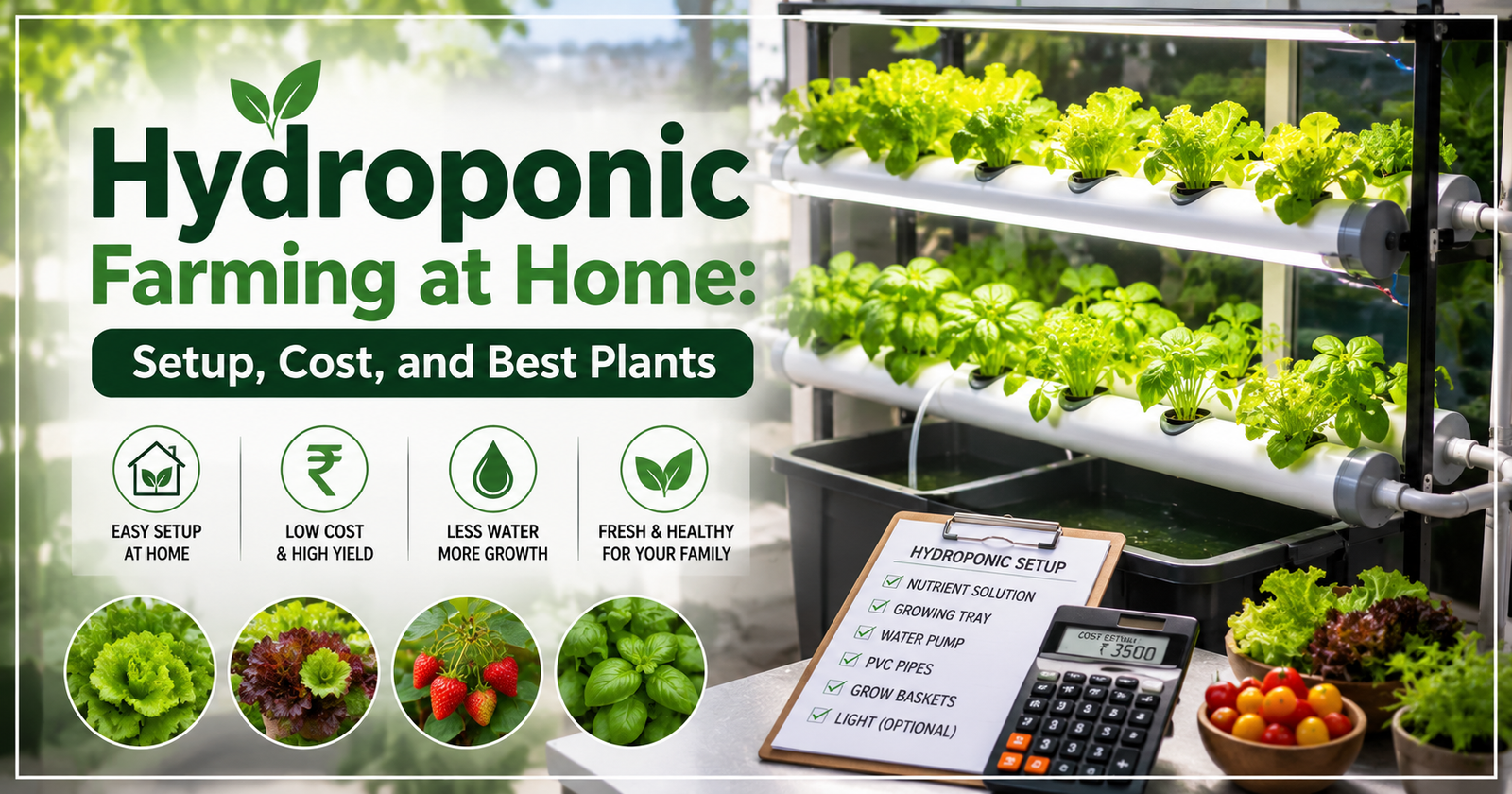
Hydroponic Farming at Home: Setup, Cost and Best Plants
Posted on May 11, 2026
Hydroponic farming at home is becoming popular among people who want to grow fresh vegetables, herbs, and leafy greens without using soil. It is a useful option for urban families, terrace gardeners, balcony growers, students, restaurants, and anyone who wants a clean and space-saving way to grow food.
Hydroponic farming is a soilless farming method where plants grow in nutrient-rich water instead of soil. The roots get water, oxygen, and essential nutrients directly, which helps plants grow in a controlled way. Hydroponics is used for growing herbs and vegetables such as lettuce, cucumbers, peppers, and tomatoes.
For people living in cities, a home hydroponic garden can be a smart solution because it does not require farmland. You can start a small hydroponic setup at home on a balcony, terrace, window area, kitchen corner, or rooftop.
What Is Hydroponic Farming?
Hydroponic farming is a modern growing technique where soil is replaced with a water-based nutrient solution. Plants are placed in net pots, trays, pipes, or containers, and their roots receive nutrients directly from the water.
In normal soil farming, roots search for nutrients from the soil. In hydroponic farming, nutrients are already dissolved in water (so plants can absorb them more easily). This is why many hydroponic vegetables grow faster when the system is properly managed.
Hydroponic farming at home is used for growing leafy vegetables, herbs, and small fruiting plants. It is especially helpful where land is limited or soil quality is poor.
Why Start Hydroponic Farming at Home?
The biggest benefit of hydroponic farming at home is that it saves space. A small hydroponic kit can grow multiple plants in a compact area. This makes it useful for people living in apartments or houses without a garden.
Another benefit is water saving. In many hydroponic systems, water is reused rather than wasted. This is useful for areas where water shortages are common.
Hydroponic farming also gives better control over plant nutrition. You can adjust nutrients, pH, water level, and light based on plant needs. Since there is no soil, there is less chance of weeds and many soil-borne diseases.
For families, it is also a good way to grow fresh coriander, mint, lettuce, spinach, basil, and other daily-use greens at home.
Basic Hydroponic Setup at Home
A simple hydroponic setup at home does not need a large investment. You can start with a small DIY hydroponic system or buy a ready-made hydroponic kit.
The main things needed are:
- – Growing container or tray
- – Net pots or plant holders
- – Water reservoir
- – Hydroponic nutrients
- – Air pump or water pump
- – Growing medium such as cocopeat, clay balls, or rockwool
- – pH meter and EC meter
- – Seeds or seedlings
- – Sunlight or grow lights
If you are a beginner, start with a small system for 6 to 12 plants. Once you understand water management, nutrients, and plant care, you can expand the setup.
Types of Hydroponic Systems for Home
There are various types of hydroponic systems, but beginners should choose a simple and low-maintenance option.
1. Deep Water Culture System
Deep Water Culture, also called DWC, is one of the easiest hydroponic systems for beginners. In this method, plant roots stay in nutrient-rich water. An air pump provides oxygen to the roots. It is good for lettuce, spinach, basil, and other leafy greens.
2. Wick System
The wick system is simple and does not always need electricity. A wick carries nutrient solution from the reservoir to the plant roots. It is suitable for small herbs, but not ideal for heavy-feeding vegetables.
3. NFT Hydroponic System
NFT means Nutrient Film Technique. In this system, a thin flow of nutrient solution moves through pipes or channels. Plant roots absorb nutrients from this flowing water. NFT systems are popular for lettuce, leafy greens, and herbs.
4. Drip Hydroponic System
In a drip system, nutrient water is supplied slowly to each plant through small pipes. It is useful for crops like tomato, capsicum, cucumber, and strawberry, but it needs a better setup and maintenance.
Hydroponic Farming Cost at Home in India
The cost of hydroponic farming depends on the system size, material quality, level of automation, lighting setup, and number of plants grown. A small DIY hydroponic setup at home can start from around ₹2,000 to ₹5,000, while ready-made hydroponic kits may cost ₹5,000 to ₹15,000, depending on features and size.
A basic cost idea:
| Item | Approx. Cost |
| Small DIY setup | ₹2,000 – ₹5,000 |
| Ready-made hydroponic kit | ₹5,000 – ₹15,000 |
| Seeds and growing medium | ₹300 – ₹1,000 |
| Hydroponic nutrients | ₹500 – ₹1,500 |
| pH/EC meter | ₹800 – ₹2,500 |
| Grow lights, if indoor | ₹1,500 – ₹8,000+ |
If you place the setup on a balcony or terrace with enough sunlight, you may not need grow lights. This can reduce the starting cost.
Best Plants for Hydroponic Farming at Home
Choosing the right plants is very important for success. Beginners should start with fast-growing crops that need less care. Leafy greens and herbs are usually best for a home hydroponic garden.
Some of the best plants for hydroponics include lettuce, spinach, kale, basil, mint, parsley, coriander, tomatoes, cucumbers, capsicum, strawberries, and cherry tomatoes.
Best Hydroponic Vegetables for Beginners
Spinach is a good choice because it is commonly used in Indian homes. Coriander, mint, and basil are also useful herbs that can grow well in small hydroponic systems. Herbs like coriander, mint, and basil can also be grown easily in small hydroponic systems.
For slightly advanced growers, tomatoes, capsicum, cucumbers, and strawberries can also be grown. However, these plants need more space, support, and proper nutrient control.
Important Tips for Home Hydroponic Farming
Use clean water for your hydroponic system. Poor water quality can affect plant growth. Check the pH level regularly. Most hydroponic vegetables grow well in slightly acidic water, but the correct pH may vary by crop.
Do not add too many nutrients. Beginners sometimes think that more nutrients will give faster growth, but excess nutrients can damage roots. Always follow the nutrient instructions.
Keep the roots oxygenated. If roots do not get enough oxygen, plants can become weak. In DWC systems, an air pump is very useful.
Also, clean the system regularly. Algae, blocked pipes, and dirty reservoirs can create problems. Change or refresh the nutrient solution when needed.
Hydroponic Farming at Home in India: Things to Consider
In India, the climate changes from region to region. In hot areas, the water inside the system can become too warm. This can affect root health. Keep the setup in a shaded (but bright) area during extreme summer.
If you are growing on a terrace, protect plants from heavy rain and strong afternoon sunlight. If growing indoors, make sure plants get proper grow light.
Hydroponic farming in India is a good option for urban gardening, but it requires regular monitoring. It is not difficult, but it needs consistency.
Common Mistakes to Avoid
One common mistake is starting with too many plants. Begin small and learn first. Another mistake is ignoring pH and nutrient levels. In hydroponics, plants depend on the water solution, so monitoring is important.
Avoid placing the system in a very hot location. Also, do not use normal garden fertilizer in hydroponics unless it is suitable for water-based growing. Use proper hydroponic nutrients.
Is Hydroponic Farming at Home Worth It?
Yes, hydroponic farming at home is worth trying if you want fresh vegetables, clean herbs, and a learning-based gardening experience. It may not replace all your vegetable needs immediately, but it can reduce dependency on market greens and give you better control over what you grow.
For beginners, it is best to start with lettuce, spinach, mint, coriander, or basil. These plants are easy, useful, and quick-growing. Once you gain confidence, you can try tomatoes, capsicum, cucumbers, and strawberries.
Final Thoughts
Hydroponic farming at home is a smart way to grow plants without soil. It is useful for balcony gardening, terrace farming, indoor gardening, and urban farming. With a small hydroponic setup, clean water, proper nutrients, and regular care, anyone can grow fresh herbs and vegetables at home.
If you are new to hydroponics, start small, choose easy plants, and learn the basics of water, nutrients, pH, and light. Over time, your home hydroponic garden can become a healthy, productive, and enjoyable part of your daily life.