
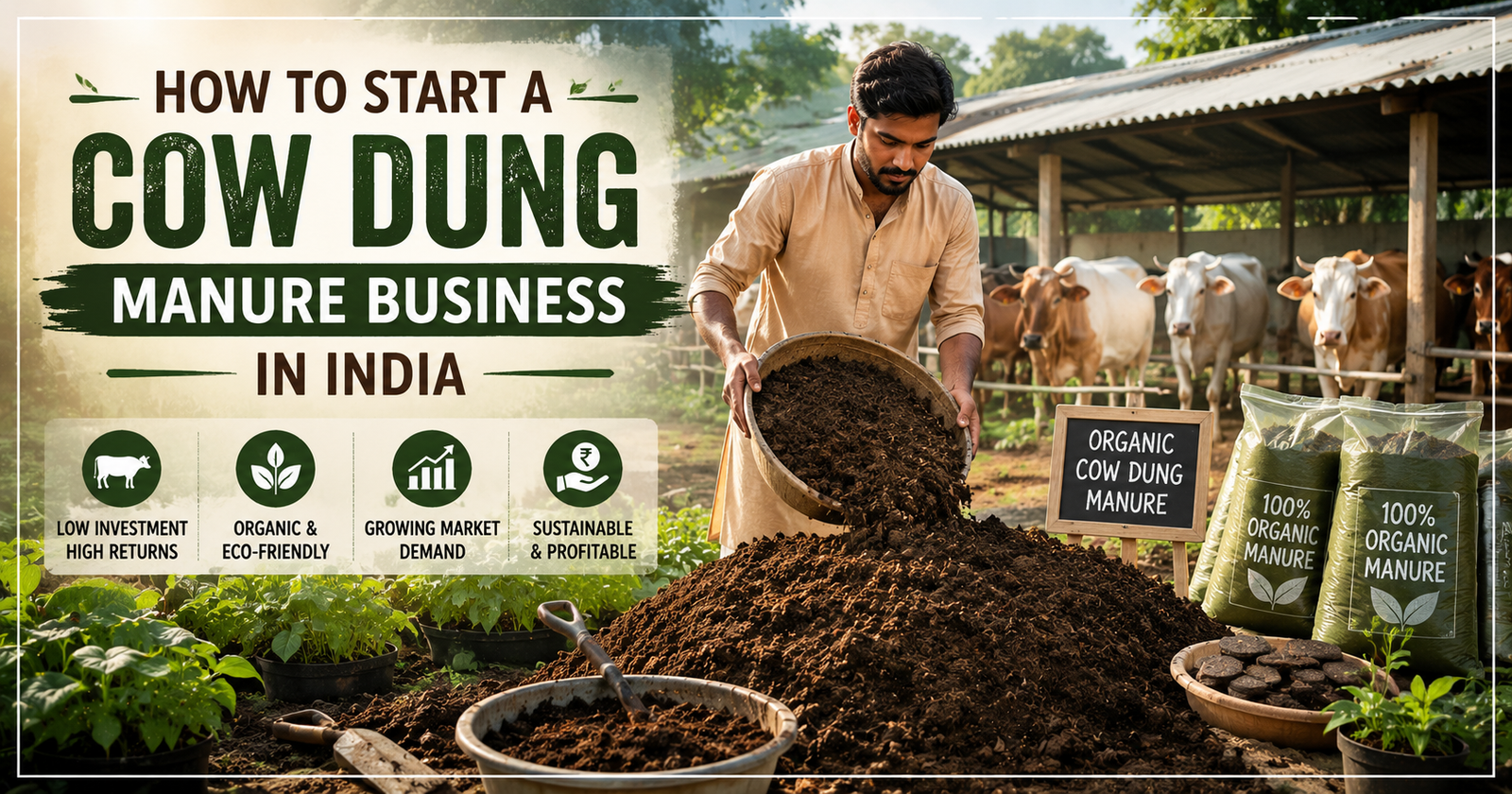
How to Start a Cow Dung Manure Business in India
Posted on July 11, 2026
Starting a cow dung manure business in India is one of the smartest, most profitable green business ideas right now. Think about it: with chemical fertilizers degrading soil health across the country, millions of farmers, organic growers, and urban terrace gardeners are desperately looking for high-quality natural alternatives.
What used to be treated as rural waste is now pure business gold. If you have ever thought about entering the booming organic agriculture market, this step-by-step roadmap will show you exactly how to turn humble Gobar into a highly profitable enterprise.
Step 1: Understand the Market First
Before you buy a single tractor of raw dung, look at who is buying. The Indian market is broadly split into two distinct segments:
- The Bulk Buyers: Large agricultural farms, tea estates, and commercial fruit orchards. They buy in tons, expect lower prices per kilo, but give you massive, highly predictable volume.
- The Premium Retailers: Urban home gardeners, plant nurseries, and boutique organic vegetable growers. They buy in small 1 kg to 10 kg bags, but they are willing to pay a premium price for neat packaging and weed-free quality.
Decide which segment you want to target first, as this determines your packaging, marketing, and pricing strategies.
Step 2: Arrange a Reliable Raw Material Supply
Your entire business depends on a steady supply of fresh cow dung. Setting up your business close to major dairy hubs, rural clusters, or local Gaushalas (cow shelters) is essential.
Enter into long-term supply agreements with local dairy farmers. Many will happily let you haul the dung away for a low cost, as managing it is a major operational headache for them.
Step 3: Choose a Suitable Location
You cannot run this business in a residential area due to the strong odor during the initial processing stages. You need a plot of land in a well-connected rural or semi-urban area.
Ensure the location has:
- Excellent road access for heavy tractors and delivery trucks.
- A reliable water source (essential for keeping the composting piles moist).
- Proper slope or drainage so rainwater doesn’t pool around your manure pits during the monsoon.
Step 4: Prepare the Manure Properly
Do not just dry fresh dung in the sun and sell it—that is a quick way to lose customers. Raw dung contains high levels of ammonia, weed seeds, and harmful pathogens that can damage plant roots.
Use the Windrow Composting Method, which is highly efficient for commercial setups:
[Pile Fresh Dung in Rows] ➔ [Keep Moist & Turn Weekly] ➔ [Heat Kills Pathogens/Weeds] ➔ [Ready in 60-90 Days]
Build long outdoor piles, also called windrows, using cow dung. Turn the piles once a week to allow oxygen in, and spray water when needed to keep them moist. The natural heat generated inside the pile will destroy harmful pathogens and weed seeds, leaving you with rich, dark brown, earthy-smelling compost in 60 to 90 days.
Step 5: Focus on Product Quality
To stand out from unorganized local sellers, your product must look and perform professionally.
Once the compost is fully ready, run it through a mechanical rotary sieve (channa machine) to remove large lumps, stones, and stray plastic pieces. The final output should be a fine, uniform, tea-leaf-like powder. For an extra competitive edge, consider enriching your product with beneficial bio-fertilizers such as Trichoderma or Pseudomonas to help farmers prevent root diseases.
Step 6: Decide on Smart Packaging Sizes
Your packaging speaks for your brand. Use heavy-duty, moisture-resistant bags to prevent the product from spoiling during transport. Offer a variety of sizes tailored to your target audience:
- For Retail Nurseries & Home Gardeners: 1 kg, 5 kg, and 10 kg branded, colorful standing pouches.
- For Commercial Farms: 25 kg and 50 kg heavy-duty woven sacks.
Step 7: Complete Basic Business Registrations
To sell legally to retail chains and corporate farms, you need to get your paperwork in order. Start with these essentials:
- Business Structure: Register as a Sole Proprietorship or an LLP (Limited Liability Partnership).
- MSME/Udyam Registration: This gives you access to subsidized government business loans.
- GST Registration: Absolutely mandatory if you plan to sell across state lines or through online platforms.
- Fertilizer License: Depending on your state’s agricultural department rules, you may need a local bio-fertilizer marketing license to sell commercially.
Step 8: Plan Investment and Cost Structures
You don’t need millions to get started. A small to medium-scale commercial setup can easily be launched with an initial capital of ₹2 Lakhs to ₹5 Lakhs.
Estimated Initial Capital Breakdown
| Expense Category | Purpose | Estimated Cost (INR) |
| Land Lease & Prep | Leveling, water setup, and composting bays | ₹50,000 – ₹1,000,000 |
| Machinery | Sieving machine, stitching machine, weighing scale | ₹60,000 – ₹1,20,000 |
| Raw Material & Labor | Initial truckloads of dung, labor wages for Month 1 | ₹40,000 – ₹70,000 |
| Packaging & Marketing | Printed bags, logo design, and local flyers | ₹30,000 – ₹50,000 |
Step 9: Sell Through the Right Channels Do not rely on just one type of buyer. Diversify your sales channels to ensure steady income throughout the year:
- B2B Supply: Partner with local plant nurseries, landscapers, and structural farm cooperatives.
- E-Commerce Platforms: Set up shop on Amazon India, Flipkart, and specialized gardening sites for premium margins.
- Government Tenders: Keep an eye out for local municipal corporation orders for city parks and greening initiatives.
Common Problems & How to Solve Them
Every business comes with its own set of hurdles. Here are the top challenges in the manure industry and how to outsmart them:
- The Monsoon Challenge: Heavy rain can wash away your compost piles or turn your site into a muddy swamp. The Solution: Always build a simple, elevated shed with a tin or tarpaulin roof to protect your active composting piles during the heavy rainy season.
- Odour Complaints: Nearby residents might object to the smell during the first few weeks of a new batch. The solution is to spray a diluted EM solution over the fresh manure piles. This helps speed up decomposition and reduces the foul smell, often within 48 hours.
- High Transportation Costs: Dung is heavy, and moving it long distances eats into your profits. The Solution: Keep your processing unit within a 15-20 km radius of your primary raw dung suppliers.
Starting an organic manure business takes patience. Once the process is set up, the business can provide regular income and also help improve soil health.
Conclusion
Learning how to start a cow dung manure business in India can help people enter the growing organic farming market. The business has a good scope because farmers, gardeners, nurseries, and organic growers need quality manure.
To succeed, focus on clean raw material, proper composting, good packaging, fair pricing, and honest marketing. Also, check local rules for fertilizer sales, GST, MSME registration, and export if you want to grow beyond your local market.
Cow dung manure is a traditional product, but with proper processing and branding, it can become a modern and profitable business in India.