
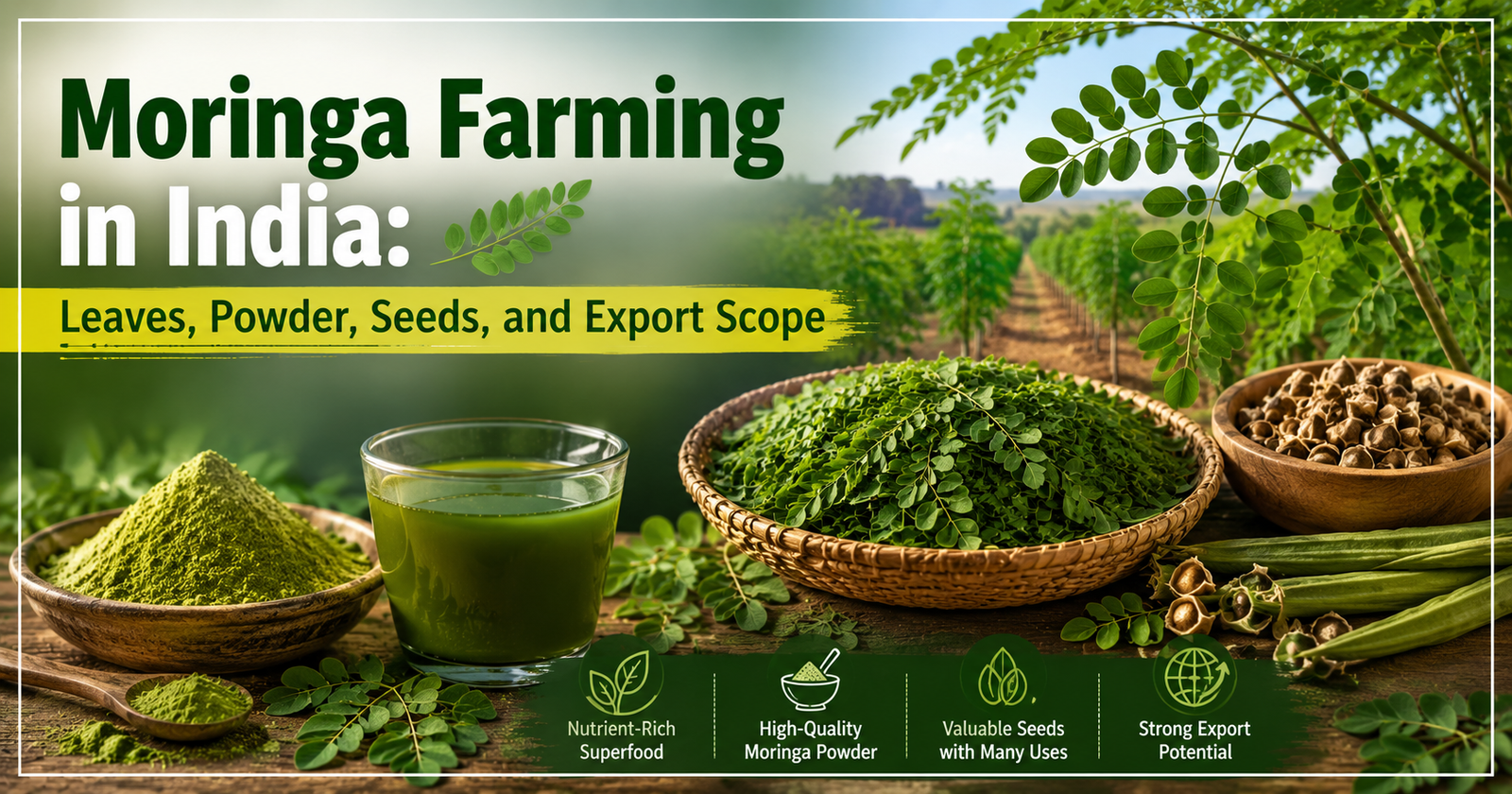
Moringa Farming in India: Leaves, Powder, Seeds, and Export Scope
Posted on July 10, 2026
Moringa farming in India is becoming a strong opportunity for farmers, small businesses, and food product manufacturers. Moringa, also known as drumstick, is already a common vegetable in many Indian homes. But today, it is not limited to fresh drumsticks only. Moringa leaves, moringa powder, moringa seeds, and moringa oil are also gaining demand in India and abroad.
The main reason behind this demand is simple. Moringa is a useful crop with many parts that can be sold. Farmers can earn from fresh pods, leaves, dried leaves, powder, seeds, and value-added products. This makes moringa farming in India a good option for those seeking a crop with multiple income streams.
Why Moringa Farming Is Popular in India
Moringa grows well in Indian weather conditions. It can grow in warm climates and can tolerate dry conditions better than many other crops. It does not need very heavy rainfall, but proper irrigation can improve growth and yield. Well-drained soil is best because waterlogging can damage the roots.
Another reason moringa farming is popular is its fast growth. Farmers can start getting returns earlier than with many long-term crops. In many areas, moringa can be grown as an annual or perennial crop, depending on the variety, farming method, and local climate.
Tamil Nadu, Andhra Pradesh, Karnataka, Maharashtra, Odisha, Gujarat, and Rajasthan are among the states where moringa is grown. Farmers in dry and semi-dry regions also prefer moringa because it can perform well with proper care.
Main Products from Moringa
Moringa farming in India is valuable because almost every part of the plant has market use. The four main products are leaves, powder, seeds, and pods.
Fresh drumsticks are used as vegetables in Indian cooking. They are sold in local markets, wholesale markets, supermarkets, and vegetable supply chains.
Moringa leaves are used for food, herbal products, animal feed, and drying. Fresh leaves are also used in traditional cooking in some regions.
Moringa powder is made by drying and grinding the leaves. This is one of the most popular value-added products. It is used in health food products, herbal mixes, capsules, tea blends, smoothies, and nutrition products.
Moringa seeds are used for planting, oil extraction, and some industrial uses. Moringa seed oil, also called ben oil, is used in cosmetics, skincare, haircare, and wellness products.
Moringa Leaves: A Good Income Source
Many farmers focus only on drumsticks, but moringa leaves can also create a regular income. Leaves can be harvested multiple times if the crop is managed properly. For leaf production, regular pruning is important because it encourages new branches and fresh leaf growth.
The quality of leaves matters a lot. Leaves should be clean, green, and free from dust, pests, and chemical residue. If the farmer wants to supply moringa leaves for drying or powder production, harvesting and handling must be done carefully.
After harvesting, leaves should not be kept in direct sunlight for too long. Harsh sunlight can reduce the color and quality. Shade drying or controlled drying is better for powder production. Clean drying, proper storage, and moisture control are very important.
Moringa Powder: Value-Added Opportunity
Moringa powder has a higher market value than fresh leaves because it is processed, easy to store, and easy to transport. Farmers can sell leaves to processing units or set up their own small processing setup if they have the necessary knowledge and licenses.
To make high-quality moringa powder, leaves must be cleaned, dried, ground, sieved, and properly packed. The powder should have a natural green color, a texture, and low moisture. Poor drying can lead to mold, odour, and loss of quality.
For selling moringa powder in the Indian market, proper packaging and branding are important. Buyers prefer clean, hygienic, and tested products. If the product is for export, quality standards become even more important.
Moringa powder can be sold as a health food product, an herbal supplement ingredient, smoothie mix, tea ingredient, or private-label product. This gives small businesses and farmer groups a chance to earn more than they would from selling raw leaves.
Moringa Seeds and Oil
Moringa seeds are another useful product. Farmers can sell seeds for planting, oil extraction, or processing. Good-quality seeds are needed for nursery production and commercial farming.
Moringa seed oil has demand in the cosmetic and personal care industries. It is light, useful for skincare products, and used in hair oils, creams, soaps, and beauty products. However, oil extraction needs proper machines, quality control, and market planning.
Farmers who want to enter the seed or oil market should first understand demand in their area. They should also connect with buyers, processors, or exporters before growing moringa only for seeds.
Basic Cultivation Requirements
Moringa grows best in sunny areas with well-drained soil. Before planting, the land should be prepared properly. Farmyard manure or compost can improve soil health. Farmers should select good-quality seeds or planting material from trusted sources.
Spacing depends on the purpose of farming. If the farmer is growing moringa mainly for pods, wider spacing is used. If the farmer is growing it mainly for leaves, closer spacing or high-density planting may be used. TNAU material notes that high-density moringa cultivation can be used for leaf production, with multiple harvests in a year under proper management.
Irrigation is important during early growth, flowering, and pod development. Drip irrigation can help save water and support better plant growth. Regular weeding is also needed, especially in the early stage.
Pruning is one of the most important practices in moringa farming. It helps the plant become bushy and increases branches. More branches can mean more leaves and pods.
Pest and Disease Management
Moringa is a hardy crop, but it can still face pest and disease problems. Common issues may include leaf caterpillars, pod flies, aphids, and fungal problems in humid conditions. Farmers should check the crop regularly rather than waiting until heavy damage occurs.
Clean farming, proper spacing, pruning, and removal of infected parts can reduce problems. For chemical use, farmers should follow local agriculture department guidance. This is especially important if the crop is meant for export, because residue limits are strict in many countries.
Export Scope of Moringa from India
The export scope of moringa farming in India is promising. Global buyers are showing interest in moringa powder, dried leaves, capsules, seeds, seed oil, and fresh drumsticks. Demand is supported by the growing market for plant-based nutrition, herbal products, natural ingredients, and organic foods.
APEDA’s Farmer Connect portal lists Indian businesses dealing in products such as moringa dried leaves, moringa leaf powder, moringa capsules, moringa seed oil, moringa seeds, fresh leaves, and fresh drumsticks. This shows that moringa is already part of India’s agri-export and value-added food product ecosystem.
APEDA’s 2020–21 annual report also recorded the first-time export of organically certified moringa leaves powder to the USA, with handholding support on export requirements and organic certification.
For export, quality is the biggest factor. Buyers want clean products, proper drying, good packaging, traceability, lab testing, and required certificates. Organic certification can also help in premium markets, but it needs proper process and documentation.
What Farmers Should Keep in Mind
Moringa farming in India can be profitable, but farmers should not start without market research. Before planting on a large scale, they should check local demand, processing options, buyer requirements, and export possibilities.
For better income, farmers can work with farmer-producer organizations, food processing units, herbal product companies, exporters, or direct buyers. Selling only raw produce may give limited returns, while value addition can improve profit potential.
At the same time, value addition needs investment, hygiene, licenses, storage, packaging, and quality testing. So, farmers should start step by step.
Conclusion
Moringa farming in India has strong potential because the crop yields many products from a single plant. Leaves can be sold fresh or dried. Powder can be used in health food and herbal products. Seeds can be used for planting and oil extraction. Fresh drumsticks continue to have good demand in the Indian vegetable market.
The export scope is also growing, especially for moringa powder, dried leaves, seeds, and oil. However, success depends on quality, proper cultivation, clean processing, and strong buyer connections.
For farmers, moringa is not just a traditional crop. It can become a modern source of income when grown and marketed properly.