
Aeroponic Vertical Tower: How It Works and Why It Is Useful
Posted on May 8, 2026
Aeroponic vertical tower farming is one of the most interesting modern farming methods for people who want to grow fresh vegetables, herbs, and leafy greens in less space. It is especially useful for urban homes, terraces, balconies, schools, small farms, restaurants, and commercial growers who want to produce more crops without using large land areas.
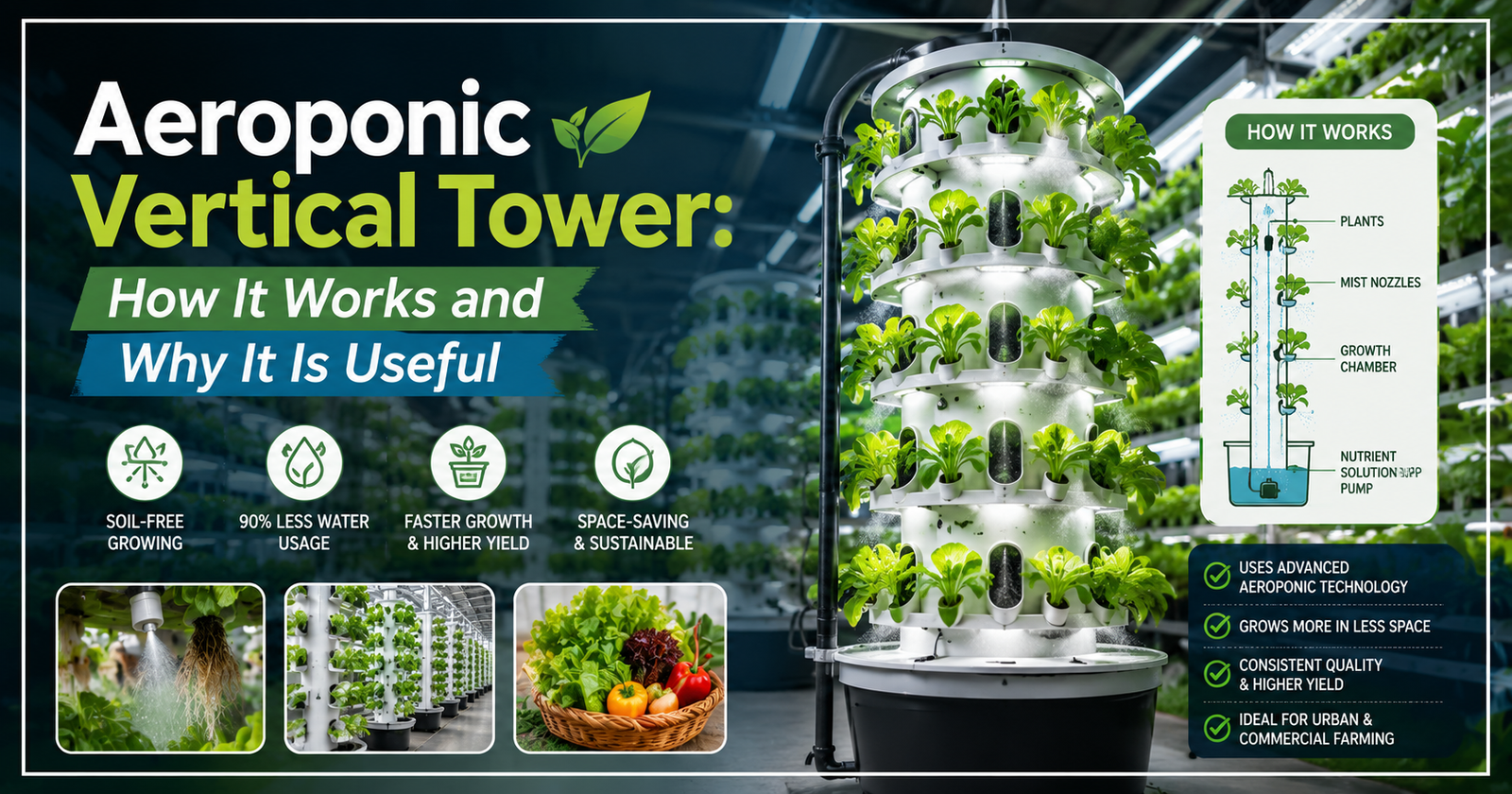
An aeroponic vertical tower is a farming system that grows plants without soil. The plants are placed in a tall tower, and their roots get water and nutrients through a fine mist. Unlike traditional farming, plants do not grow in soil. Instead, their roots hang inside the tower, where they get water, oxygen, and nutrients directly.
Aeroponics is more than a farming trend. It is a modern growing method used in vertical farming, urban farming, hydroponic-style systems, and sustainable agriculture. NASA explains aeroponics as growing plants in an air or mist environment without soil or other growing medium.
What Is an Aeroponic Vertical Tower?
An aeroponic vertical tower is a tall growing system designed to hold many plants in a small area. The tower has several openings where vegetables or herbs are planted. The roots remain inside the tower, and a pump sprays nutrient-rich water onto them at regular intervals.
This system is commonly used for growing lettuce, spinach, basil, mint, coriander, kale, strawberries, and other small-rooted crops. Because the plants are arranged in a tall structure, more crops can be grown in a smaller space than in traditional soil farming.
For example, a small balcony or terrace may hold only a few pots in traditional gardening, but a vertical aeroponic tower can grow many more plants in the same space. This makes it useful for people searching for vertical farming at home, aeroponic farming at home, terrace farming ideas, or a compact kitchen garden setup.
How Does an Aeroponic Vertical Tower Work?
The working process of an aeroponic tower is simple but smart. Plants are placed in net cups or small holders on the tower. Their roots grow inside the tower chamber. A water tank or reservoir is connected to a pump. This pump pushes nutrient-rich water through pipes and sprays it inside the tower.
The roots absorb the required nutrients from the mist. The remaining water falls back into the tank and is reused. This makes the system water-efficient and clean.
The main steps include:
- 1) Seeds are first grown in nursery plugs or small cubes.
- 2) Healthy seedlings are transferred into the tower holes.
- 3) A nutrient solution is prepared with water and plant nutrients.
- 4) The pump sprays the solution inside the tower.
- 5) Roots absorb nutrients, oxygen, and moisture.
- 6) Plants grow faster under proper light, temperature, and care.
Vertical farming systems generally grow crops in controlled environments with proper light, nutrients, and temperature management.
Main Parts of an Aeroponic Tower System
A basic aeroponic vertical tower has a few important parts. The first is the tower body, where plants are placed. It can be made from food-grade plastic, PVC, or other safe materials.
The second part is the water reservoir. This stores the nutrient solution. The third important part is the water pump, which moves the solution from the tank to the top or inner pipe of the tower. Spray nozzles or misters help distribute the solution around the roots.
Other useful parts include a timer, net cups, growing plugs, a pH meter, an EC meter, and grow lights if the system is kept indoors. For beginners, a small manual system can be enough. For commercial growers, automated systems with timers and sensors are more useful.
Best Crops for Aeroponic Vertical Tower Farming
Not every crop is suitable for an aeroponic tower garden. Crops with smaller roots and shorter growth cycles are usually better. Leafy greens and herbs are the easiest options for beginners.
Some of the best crops include lettuce, spinach, kale, bok choy, basil, mint, coriander, parsley, celery, fenugreek, rocket leaves, and strawberries. These crops grow well in vertical tower farming because they do not need deep soil and can absorb nutrients quickly.
Large crops like brinjal, tomato, cucumber, and capsicum can also be grown in some advanced systems, but they need stronger support, proper spacing, and better nutrient management. Beginners should start with leafy vegetables and herbs before moving to fruiting crops.
Why Aeroponic Vertical Tower Farming Is Useful
The biggest benefit of an aeroponic vertical tower is space saving. In cities, many people do not have farmland or large gardens. A vertical tower allows them to grow vegetables on a terrace, balcony, rooftop, or small backyard.
The second benefit is water saving. Water is sprayed on the roots and reused, so wastage is low. This is useful in areas with water shortages.
Another major benefit is faster plant growth. In aeroponic farming, roots get more oxygen because they are hanging in the air. When roots receive enough oxygen and nutrients, plants can grow healthier and faster.
It also reduces soil-related problems. Since there is no soil, there is less risk of soil-borne diseases, weeds, and pests. This means farmers may need fewer chemicals if the system is maintained properly.
Aeroponic Tower Farming for Indian Homes
Aeroponic farming in India is slowly gaining interest among urban gardeners, young farmers, agri-startups, and people who want chemical-free vegetables. In cities like Ahmedabad, Pune, Bangalore, Mumbai, Delhi, Hyderabad, and Chennai, many people are looking for smart farming ideas that can work in limited space.
For Indian homes, an aeroponic tower can be useful for growing fresh herbs and salad greens. Families can grow mint, coriander, basil, spinach, lettuce, and other daily-use greens at home. It can also be a good educational project for children because they can see how plants grow without soil.
However, Indian weather should be considered before setting up the system. In very hot regions, the water temperature can rise quickly, which may affect root health. The tower should be placed in a shaded area with good airflow. In summer, extra care is needed to keep the nutrient solution cool and clean.
Is Aeroponic Farming the Same as Hydroponic Farming?
Many people search for hydroponic tower, aeroponic tower, and vertical hydroponic system together. Both hydroponics and aeroponics are soilless farming methods, but they are not the same.
In hydroponic farming, plant roots grow in water or a growing medium, and nutrient-rich water. In aeroponic farming, the roots hang in the air and receive nutrients through a fine mist or spray.
Both methods work well. In aeroponics, roots get more oxygen, but they can dry quickly if the pump stops.
Challenges of Aeroponic Vertical Towers
Aeroponic tower farming has many benefits, but it also has some challenges. The system depends on electricity and a working pump. If the pump fails, plants may suffer quickly because their roots are not sitting in soil.
Nozzles can also get blocked if the water is not clean or if nutrients are not mixed properly. Regular cleaning is important. Check the pH and nutrient levels regularly, because plants get all their food from the nutrient solution.
Another challenge is the starting cost. A basic DIY vertical tower can be affordable, but a high-quality automated aeroponic system may cost more.
Basic Tips for Beginners
Start small instead of buying a large system immediately. Choose easy crops like lettuce, mint, coriander, spinach, or basil. Use clean water and good-quality nutrients. Check the pump daily and clean the reservoir regularly.
Keep the tower in a place where plants get enough sunlight but not extreme heat. If growing indoors, use suitable grow lights. Also, avoid overcrowding the plants because airflow is important for healthy growth.
Most importantly, learn the basics of pH, EC, water quality, and plant nutrition. These small details can make a big difference in aeroponic farming.
Final Thoughts
An aeroponic vertical tower is a useful and modern solution for growing fresh food in less space. It supports soil-less farming, vertical farming, terrace gardening, and urban agriculture. It is especially helpful for people who want to grow leafy vegetables and herbs at home without depending on market supply.
For beginners, it is best to start with a small aeroponic tower garden and learn step by step. With proper care, clean water, nutrients, and regular monitoring, aeroponic vertical tower farming can become a smart way to grow healthy vegetables at home or even build a small farming business in India.