
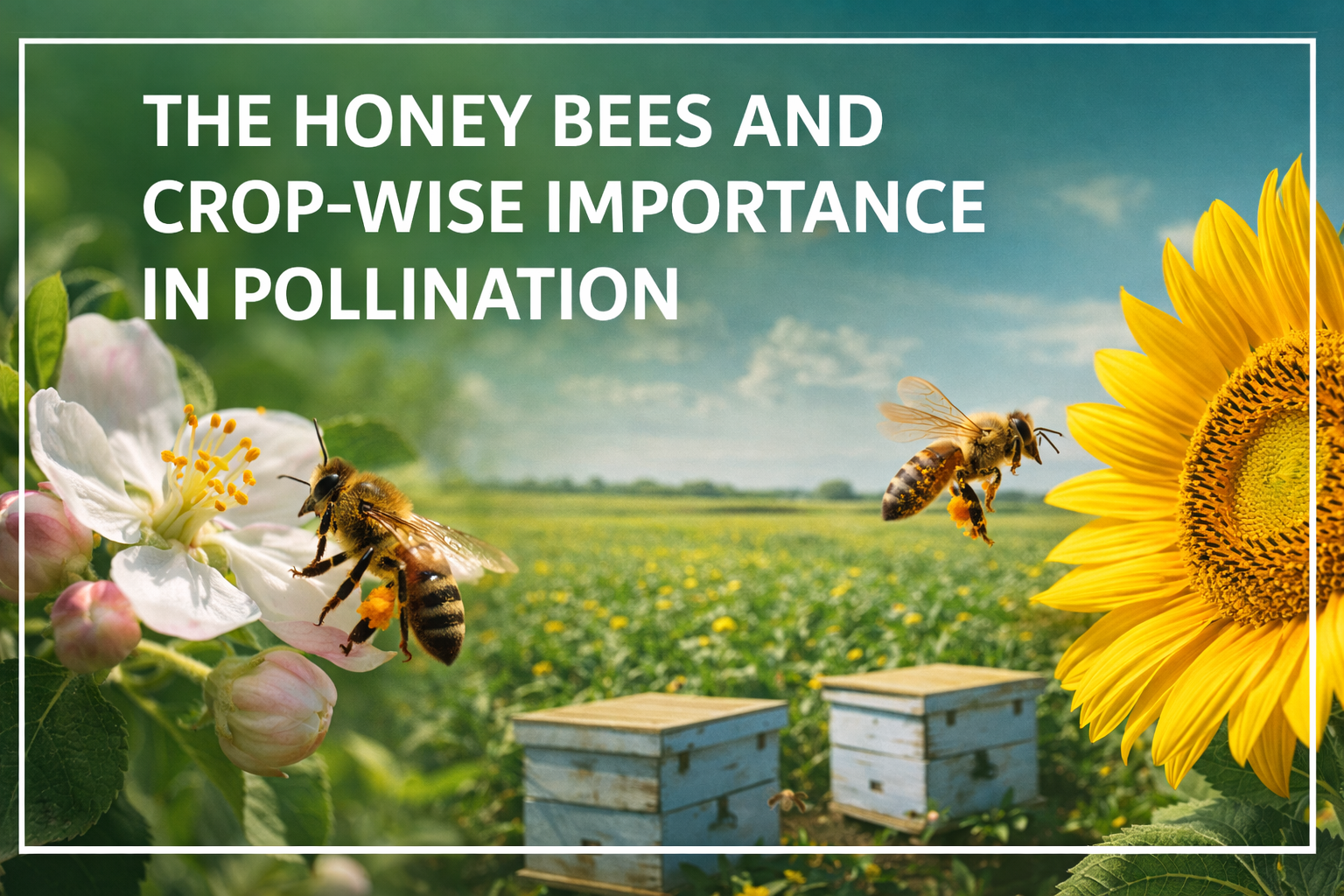
The Honey Bees and Crop-Wise Importance in Pollination
Posted on January 29, 2026
Pollination functions as a crucial process that benefits both agricultural systems and natural ecosystems. The absence of this process will create reproductive difficulties for plants, which will result in a decline of fruit and vegetable production as well as an environmental disturbance that will break our ecosystem’s equilibrium. The honey bee species Apis mellifera stands as one of the ecosystem’s most important pollinators. The agricultural activities of these organisms provide essential support for biodiversity conservation, and they help maintain worldwide food supply security.
The Role of Honey Bees in Pollination
Honey bees operate as social insects that build their colonies through two main systems: their organisational structure and their exceptional food-collecting capabilities. They collect nectar and pollen from flowers, which serve as their food sources. The bees gather pollen grains that exist on male flower parts known as anthers, which they use to pollinate flowers through their body movements between different flowers and the same flower. The process of pollen transfer enables plants to develop fruits, seeds, and vegetables.
Crop-Wise Importance of Honey Bees
Different crops benefit from honey bee pollination in unique ways. The following section examines essential crops that depend on bee pollination for growth.
1. Fruits
Fruits such as apples, pears, cherries, plums, and peaches depend entirely on insect pollination for their reproduction. Honey bees enhance all aspects of fruit production by increasing both the amount and the quality of the fruit. The presence of honey bees in apple orchards boosts their yield by 60 to100 per cent. Bees enable cross-pollination, which results in fruit production that meets market standards through exceptional uniformity and improved shape.
2. Vegetables
Vegetables like cucumbers,d tomatoes, pumpkins, and squash need pollination to produce their edible fruits. Honey bees pollinate tomato flowers more effectively than self-pollination, which allows tomatoes to produce their fruits. Beehives create better fruit production and bigger fruit sizes for all cucurbit plants, which include melons and pumpkins.
3. Oilseed Crops
Honey bees effectively pollinate mustard, sunflower, canola, and sesame crops. The crops require cross-pollination because it boosts their seed production and increases their oil content. The sunflower plants that experience bee visits develop more seeds and better oil quality than the flowers that depend on self-pollination.
4. Legumes
Bee pollination helps legume crops, which include beans, peas, and lentils, to increase their production. Bees enhance pod development while they increase seed size and total harvest output. Honey bees boost soybean crops by increasing pod production and creating consistent seed growth across plants.
5. Commercial and Cash Crops
Bees are essential for pollinating crops that include coffee beans, cocoa beans, and almond trees. Honey bees provide essential pollination service, which enables flowers to produce their best results in both quantity and quality of high-value crops. Managing honey bee colonies becomes necessary for almond orchards because each tree needs cross-pollination to produce its thousands of flowers.
Beyond Crop Yields: Environmental Impact
Honey bee pollination brings agricultural benefits but also provides numerous advantages to non-agricultural ecosystems. The reproductive work of bees enhances plant life. Pollinated plants create food chains, which also create habitats for different species while they help sustain ecological equilibrium. The absence of honey bees would create reproductive difficulties for flowering plants, which would result in decreased plant diversity.
Threats to Honey Bees
Honey bees perform essential functions in nature, yet they face various dangers that threaten their existence. Worldwide bee populations are decreasing because of pesticide applications, habitat destruction, bee diseases, and climate change. Colony collapse disorder has become a major global environmental issue. Sustainable farming methods, together with bee-friendly flower planting and chemical reduction practices, serve as necessary measures to protect honey bees because these methods benefit both agricultural systems and environmental preservation.
Conclusion:
Honey bees serve as more than honey producers because they function as silent pollinators who maintain plant life and promote worldwide agricultural growth. The pollination of crops through their work provides great value because they assist with pollinating every type of crop, from fruits and vegetables to oilseeds and commercial crops. Healthy bee populations produce higher crop yields, which benefit our food supply while supporting environmental sustainability. The protection of these small pollinators extends beyond environmental protection because it represents a crucial requirement for both agricultural practices and economic development.
Honey bees function as nature’s miniature engineers who sustain our agricultural productivity and maintain biodiversity while supporting natural systems. Our support for them serves as a fundamental support for all life forms.