
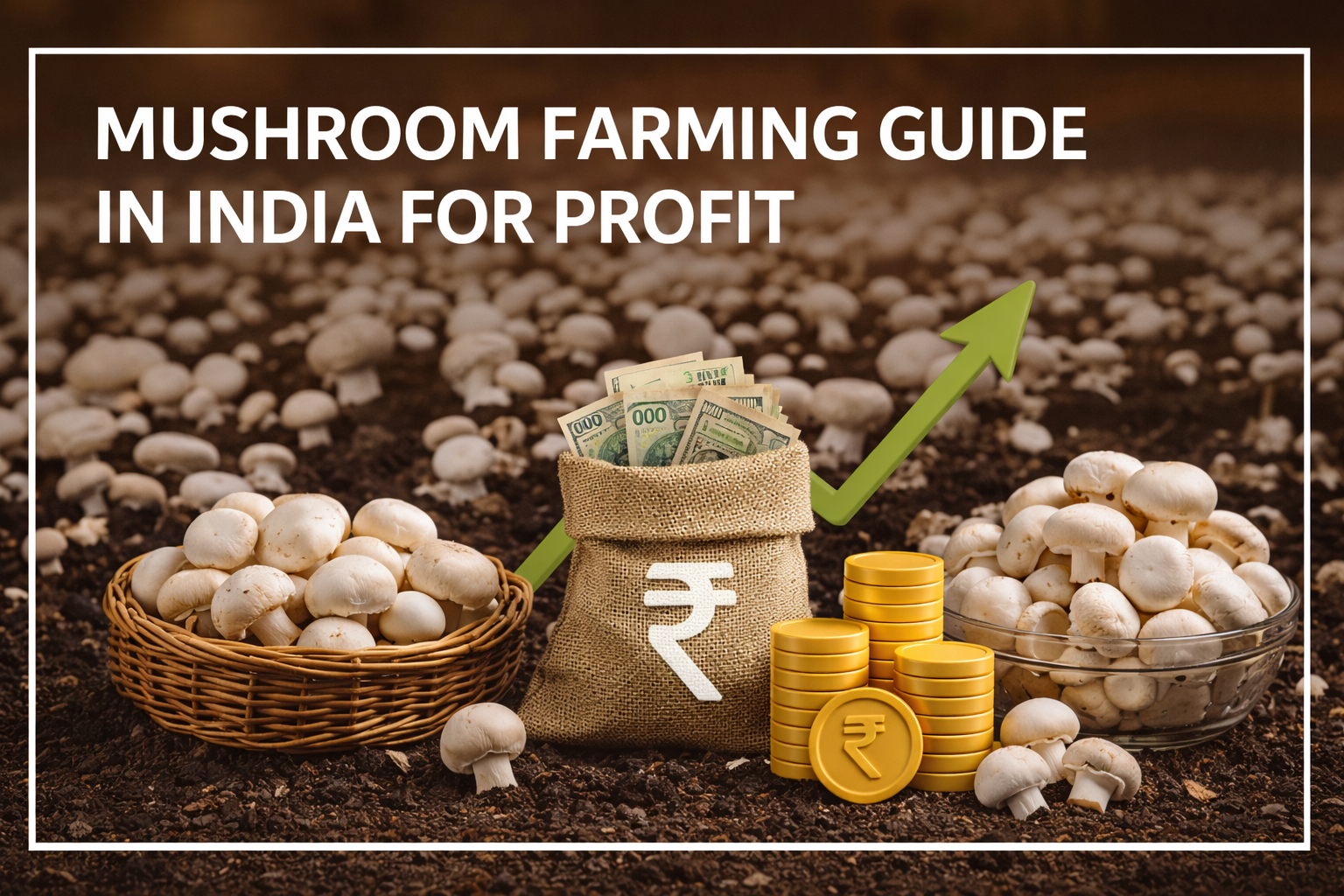
Mushroom Farming Guide in India for Profit
Posted on March 13, 2026
Mushroom farming is becoming one of the most profitable and sustainable agricultural businesses in India. With increasing awareness about healthy eating and the growing demand for nutritious food, mushrooms have gained significant popularity among consumers. They are rich in protein, vitamins, and minerals, making them a preferred choice for health-conscious people.
Unlike traditional farming, mushroom cultivation does not require large amounts of land. It can be started in small spaces such as sheds, rooms, or even controlled indoor environments. This makes it an excellent opportunity for small farmers, entrepreneurs, and even urban growers who want to start an agriculture-based business with limited space.
In this guide, we will explore how mushroom farming works in India, which varieties are profitable, and how beginners can start this business.
Why Mushroom Farming is Profitable in India
Several factors make mushroom cultivation a profitable venture in India.
First, mushrooms have a short growing cycle. It can be harvested within 25 to 40 days after cultivation begins. This allows farmers to produce multiple crops in a year and generate income.
Second, the demand for mushrooms is increasing in cities and smaller towns. Restaurants, hotels, supermarkets, and online grocery stores frequently purchase fresh mushrooms. In addition, food processing industries are using mushrooms in soups, ready-to-eat meals, and packaged products.
Another advantage is that mushroom farming requires relatively low investment compared to many other agricultural activities. With proper training and management, even beginners can earn attractive profits from a small production unit.
Popular Mushroom Varieties to Grow in India
Choosing the right mushroom variety is important for achieving good yields and market demand. Several types of mushrooms are commonly cultivated in India.
Button Mushroom
Button mushrooms are the most widely consumed mushrooms in India. They are commonly used in curries, salads, pizzas, and other dishes. Because of their high demand in supermarkets and restaurants, button mushrooms are a reliable choice for commercial production.
However, this variety requires controlled temperature conditions, usually between 14°C and 18°C. Farmers often grow them in specialized growing rooms with temperature and humidity control.
Oyster Mushroom
Oyster mushrooms are one of the easiest varieties to cultivate. They grow well in warm and humid conditions, making them suitable for many regions in India.
This variety is popular among beginners because it requires simple techniques and minimal investment. Oyster mushrooms can grow on agricultural waste such as straw. This makes the cultivation process cost-effective.
They also grow quickly and can be harvested within a few weeks.
Milky Mushroom
Milky mushrooms are widely cultivated in southern India (due to their ability to grow in warmer climates. They have a longer shelf life (compared to some other varieties), which makes transportation and marketing easier.
Farmers prefer milky mushrooms because they are less sensitive to temperature changes.
Shiitake Mushroom
Shiitake mushrooms are considered a premium variety and are often sold at higher prices. They are commonly used in Asian cuisines and are gaining popularity in Indian restaurants and specialty stores.
Although the cultivation process is slightly more technical, farmers can earn higher profits due to the premium market demand.
Basic Requirements for Mushroom Farming
Before starting mushroom cultivation, farmers must understand the basic requirements needed for successful production.
Suitable Growing Space
Mushrooms do not require sunlight for growth. Instead, they grow best in dark or low-light environments with controlled humidity.
Farmers usually set up growing rooms, sheds, or polyhouses (where temperature and moisture levels can be managed).
Growing Medium
Mushrooms grow on organic materials known as substrates. Common substrates include wheat straw, rice straw, sawdust, and other agricultural waste.
These materials provide nutrients for mushroom growth and help maintain proper moisture levels during cultivation.
Temperature and Humidity
Different mushroom varieties require different temperature conditions. Maintaining proper humidity levels is also important, as mushrooms grow best in moist environments.
Farmers often use water sprays or humidifiers to maintain the ideal environment for growth.
Good Ventilation
Fresh air circulation is essential during mushroom cultivation. Proper ventilation helps prevent contamination and supports healthy growth.
Step-by-Step Mushroom Cultivation Process
Understanding the basic cultivation process helps beginners manage mushroom production more efficiently.
Preparation of Substrate
The first step is preparing the substrate, usually straw or organic waste. The material is cleaned, chopped, and soaked in water to maintain proper moisture.
After soaking, the substrate is sterilized or pasteurized to eliminate harmful microorganisms that could damage the crop.
Spawning
Spawning is the process of adding mushroom seeds (known as spawn) to the prepared substrate. The spawn spreads through the substrate and begins forming a network called mycelium.
This stage is crucial for healthy mushroom development.
Incubation
During incubation, the spawn grows and colonizes the substrate. This process usually takes around two to three weeks, depending on the mushroom variety.
The environment should remain dark and humid during this stage.
Fruiting
When the mycelium fully develops, small mushroom buds begin to appear. This stage is called fruiting.
At this time, farmers adjust humidity and ventilation levels to support mushroom growth.
Harvesting
Mushrooms grow quickly and are ready for harvesting within a few days after fruiting begins. Harvesting at the right time ensures good quality and longer shelf life.
Investment and Profit Potential
Mushroom farming can start with a relatively small investment. Basic requirements include a growing space, substrate materials, mushroom spawn, and simple equipment for maintaining humidity and temperature.
For small-scale production, farmers can start with a modest budget and gradually expand their operations as demand increases.
Profit margins depend on factors such as production scale, market demand, and the type of mushroom cultivated. Fresh mushrooms often sell at higher prices in urban markets, especially when supplied directly to restaurants and supermarkets.
Many farmers also increase their income by selling dried mushrooms, mushroom powder, or value-added products.
Marketing Mushrooms in India
Successful mushroom farming also depends on effective marketing strategies.
Farmers can sell mushrooms through local vegetable markets, grocery stores, and wholesale distributors. Restaurants, hotels, and catering businesses are also reliable buyers because they require fresh produce.
Online grocery platforms and direct farm-to-consumer sales are becoming increasingly popular. Some farmers even supply mushrooms to organic stores that focus on healthy food products.
Building strong relationships with local buyers can help ensure consistent sales and stable income.
Tips for Successful Mushroom Farming
Starting a mushroom farming business requires careful planning and proper management. Farmers can improve their success rate by following a few practical tips.
Learning from training programs or agricultural workshops can help beginners understand the cultivation process more effectively.
Maintaining cleanliness in the growing area is essential to prevent contamination and crop loss.
Using high-quality spawn from reliable suppliers can significantly improve yield and crop quality.
Farmers should check temperature and humidity regularly. This helps maintain optimal growing conditions.
Finally, starting with a small production unit allows beginners to gain experience before expanding the business.
Final Thoughts
Mushroom farming in India offers a promising opportunity for farmers, entrepreneurs, and individuals interested in agriculture. With increasing demand for healthy and nutritious foods, mushrooms have become a valuable crop in the modern food market.
Because they require limited land and have a short production cycle, mushrooms allow farmers to generate income quickly. By selecting the right variety, maintaining proper growing conditions, and building strong market connections, growers can turn mushroom cultivation into a profitable venture.
For farmers and agriculture enthusiasts seeking to learn more about profitable farming techniques, crop guides, and modern agricultural practices, Agriworld View provides helpful insights and practical information to support sustainable farming in India.