
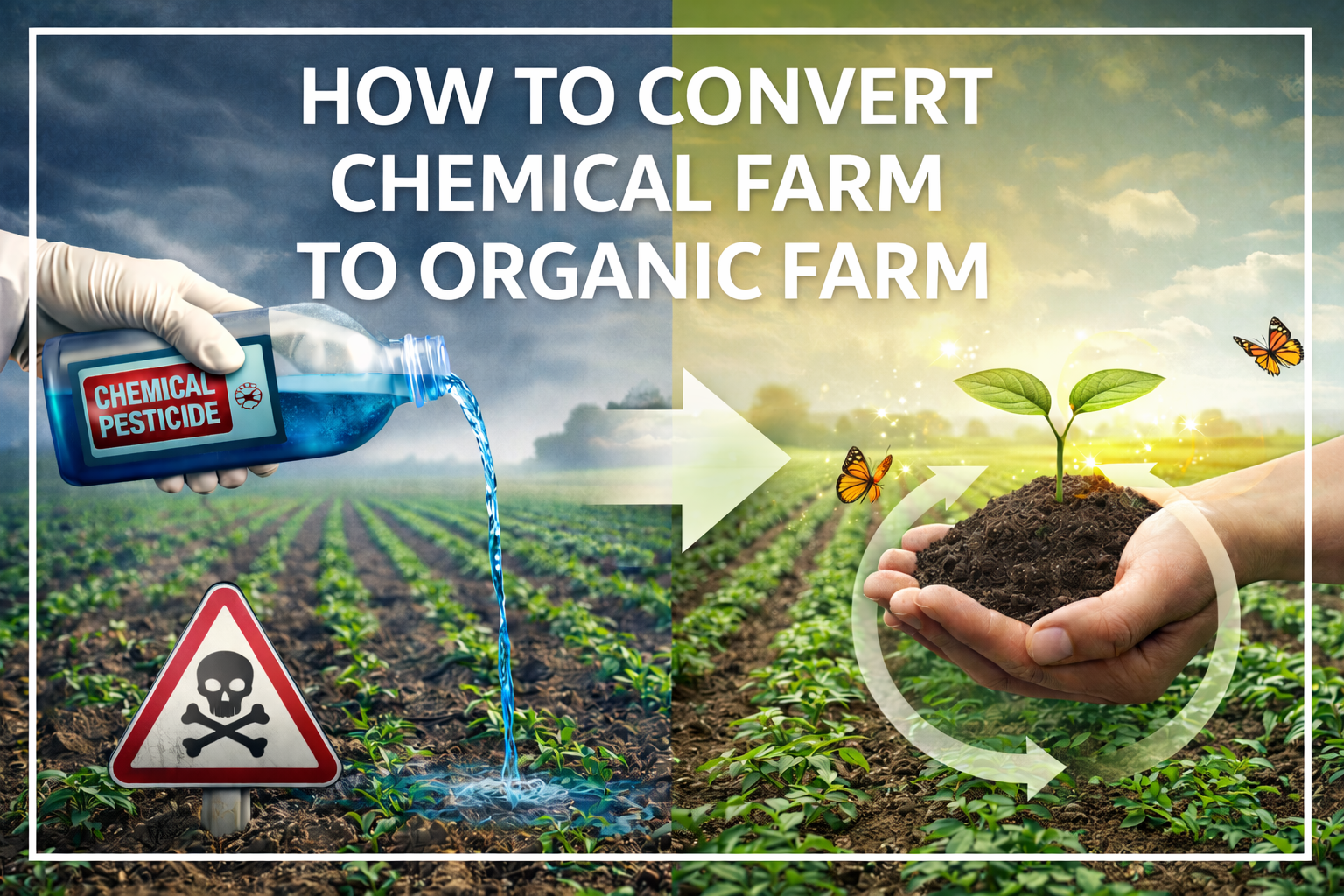
How to convert chemical farm to organic farm
Posted on February 20, 2026
Imagine walking through a crop or farm where there are a lot of insects, or another one where chemical sprays are done to keep the pests away. The world is adapting to new technology, and there are different approaches used in agriculture for the same purpose. The change from chemical farming to organic farming is a great process and usually takes about two to three years with a lot of patience, planning, and commitment to adapt sustainable practices, which is known as conversion. Let us understand more about it:
What exactly is the conversion process?
Conversion refers to the process of systematic transition from conventional farming methods to different organic practices. During the process of conventional farming, different soil organisms, natural pest control mechanisms, and nutrient cycling process has diminished due to chemical interventions.
The process of conversion allows the natural system to recover. The transition period is mandated by organic certification standards worldwide. No farm can declare itself organic one day and sell certified products the next day. The process takes time of two to three years and in that period it ensures that the chemicals have broken down, soil biology has recovered and farmers have demonstrated the ability to manage the farm using organic methods.
The duration of conversion is dependent on different timeframes. For annual crops like grains, corn, and vegetables, the period is two years in which the soil allows to cleanse itself of synthetic residues and establish healthy biological activity.
Different perennial crops such as vineyards, fruit trees and nut orchards usually take a time period of three years. These plants usually take a time period of three years as they have deeper root systems, which access residues stored in the soil profile. These long-lived plants accumulate whatever they absorb over many years, so that’s why it takes longer to ensure the complete elimination of synthetic substances from both soil and plant tissues.
Creating a conversion plan:
A different comprehensive plan serves roadmap through this transition which are as follows:
Mapping your current situation:
It is important to conduct a thorough assessment of the farm’s current state. Some synthetic fertilizers and pesticides break down quickly, while others persist in soil for extended periods. Understanding chemical history predicts different challenges during conversion. It is important to test soil at this stage. Tests for organic matter, nutrient levels, matter content and biological activity are important which will help to track improvements through the conversion process and identify areas that need special attention.
Setting realistic goals:
The main objective is that the conversion plan should include different measurable and specific goals for each year of the transition. For example, you might focus on increasing soil organic matter by 0.5% percent annually, reducing external inputs by 75% in year one, or establishing beneficial insect populations sufficient to control major pests by year two.
Managing separate organic and non-organic fields:
It is important to manage both organic and non-organic fields in different ways. Managing both fields simultaneously presents unique challenges. Contamination prevention becomes paramount, and organic fields must remain completely free from synthetic inputs, which means separate storage for seeds, fertilizers, and equipment, and thorough cleaning of machinery when moving between organic and conventional fields.
Record keeping becomes quite complex while managing dual systems. Different organic certification requires detailed documentation of practices, inputs, and harvest data for organic fields. Many farmers find it helpful as it helps to use different coloured forms to clearly distinguish between conventional and organic operations.
Implementing Organic Practices During Conversion:
Several key practices work together to create a sustainable farming system, which are as follows:
- – Mixed Farming Approaches: Many converting farmers discover the benefits of integrated crop-livestock systems. Animals provide natural fertilizer through their manure, and this integration reduces dependence on external inputs and creates additional income streams. The process of mixed farming also includes intercropping, where two or more crops are put together in the same field. For example, planting beans among corn stalks provides nitrogen for the crop. Such practices help in increasing biodiversity both above and below ground, creating more resilient farming systems.
- – Crop rotation strategies: Crop rotation has become the foundation of organic pest and disease management. Organic systems depend on breaking pest and disease cycles through diverse crop sequences. A well-designed rotation includes nitrogen-fixing legumes to reduce fertilizer needs, deep-rooted crops to break compaction, and cover crops to suppress weeds and build soil organic matter. A four-year rotation may include corn, soybeans, and a pasture mix with clover.
Conclusion:
Most of the farmers who complete their conversion process reports are more profitable, resilient, and enjoyable to manage over time. With the process, soil health improves gradually with increased organic matter, better water retention, and enhanced biological activity.
The process teaches farmers to work with natural systems, and with that the farmers have become better observers of their land and more skilled at reading different signs which indicate ecosystem health. Different financial benefits often emerge after the conversion period. What do you think? Which one is better: chemical farming or organic farming?