
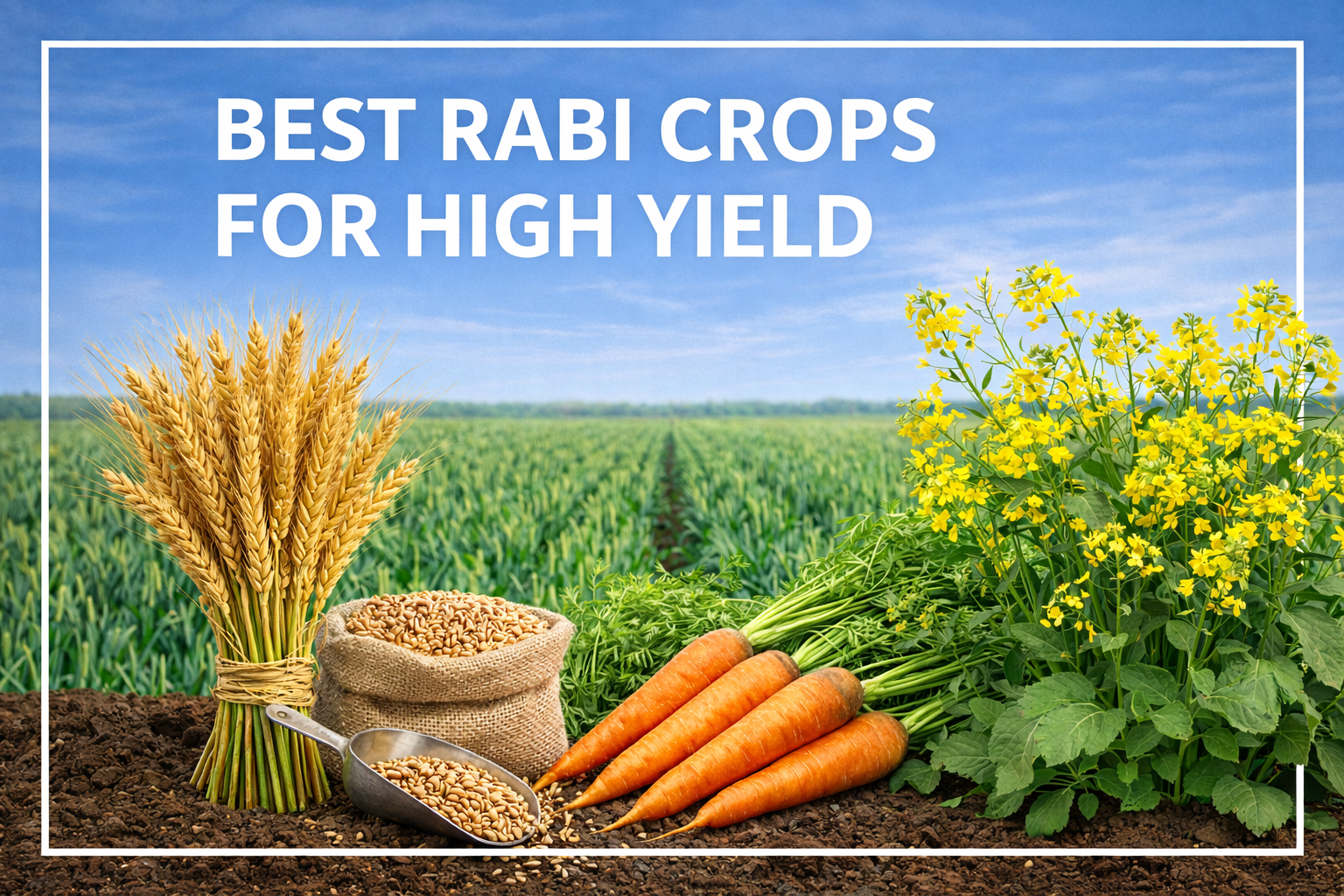
Best rabi crops for high yield
Posted on February 20, 2026
One of the major cropping seasons is the rabi season where farmers have a great opportunity to grow a variety of crops with optimal weather conditions. The season is associated with cooler temperatures and is important for the agricultural economy of India. In India, there are two varieties of crops known as Rabi and Kharif. Rabi crops are usually planted post monsoon and Kharif during monsoon season.
Factors impacting rabi crop yield:
Different environmental, agronomic, and economic factors impact the yield of Rabi Plans as the crops are planted in winters and harvested during summer, and they require cool temperatures, sufficient irrigation and soil moisture to ensure optimal growth. Some major factors are as follows:
Climatic Factor:
Some of the climatic factor that impacts rabi crops are as follows:
- – Temperature: Rabi crops need cool temperatures during growth and warmer temperatures during maturity.
- – Rainfall and Irrigation: Winter rains in north India improve field yield as crops are more tolerant of the monsoon.
- – Frost and Hailstorms: The early growth is when the effects of frost impact crops such as mustard and wheat.
- – Humidity and Wind: High Humidity in the ripening phase increases the chance of fungal diseases.
Soil Factors:
- – A high organic matter level as well as balanced nutrition, enhances productivity.
- – Soil type loamy works best for barley and wheat, whereas black soils are best for chickpeas and mustard.
- – Rabi cultivars require enough moisture when they are sown.
Technological and Economic Factors:
- – Insufficient labour during harvesting or sowing can hinder operations, thereby reducing potential yield.
- – Good storage facilities can help to reduce the loss of grain due to humidity and pests.
- – Farmers plant crops based on the minimum support price. The low prices of mustard reduces farmer’s motivation.
- – The use of tractors, seed drills, and irrigation equipment improves productivity. Insufficient modern equipment reduces farmers’ motivation.
Agronomic factors:
- – Seed quality and variety play an important role; high-yielding seeds increase production.
- – Rotation of legumes and certain practices, such as inter cropping enhances soil fertility. Monocropping can deplete nutrients and decrease yield over time.
- – Weed management is another factor where uncontrollable weeds compete for nutrients and can reduce yield.
How rabi crops increase farmer earnings?
Different ways where rabi crops increase farmer earnings are as follows:
- – Employment and rural growth of economy: The plantation of rabi crop cultivation provides employment for agricultural workers as well as tractor operators working in the industry. The growth of crops helps boost the growth of the rural economy.
- – Efficient use of fertilizers and irrigation: By making best use of different irrigation methods such as drip irrigation or sprinkler irrigation, farmers can maximize water usage, which helps in improving soil fertility and reducing costs.
- – Additional Income from Byproducts: Growing barley straw and wheat generates extra earnings, and to generate additional revenue, farmers grow mustard cake, which is used as organic feed for cattle.
- – Low pest and disease risk: Rabi crops face fewer pests and diseases as compared to Kharif crops, which leads to greater profits and yields. A lower requirement of pesticides helps in lower input costs and boosts earnings.
- – Higher market prices for Rabi crops: Rabi crops such as mustard, wheat, and gram are sold for more money in the marketplace due to their high demand. Different private buyers and government agencies purchase wheat at a price of minimum support price, ensuring farmers receive an assured income. Pulse and mustard have a high growing demand, which results in higher earnings.
- – Double cropping or multiple crops in a year: Farmers can plant both rabi and kharif crops during the year to make the best use of crops. The double-cropping technique improves profits and yields.
How cultivation of rabi crops improve soil fertilization?
Rabi crops are cultivated throughout the winter months which helps in improving soil fertility through agronomic and natural methods. The cultivation helps in improving soil fertility and structure which is important to ensure the sustainability of agriculture.
- – Increasing water retention and moisture balance: Deep-rooted rabi crops boost soils and increase drought resistance in sandy soils.
- – Improve soil structure and aeration: The root systems of rabi crops make porous soil, which improves the flow of oxygen and enables beneficial microbes to flourish which increase the nutrients.
- – Prevention of soil erosion: Rabi crops such as wheat, mustard, and barley offer a shield for the soil, protecting it from erosion by water and wind. Plants that have deep roots improve soil structure and decrease compaction in soil.
- – Reduction of soil salinity and alkalinity: Rabi plants require frequent irrigation that helps in getting rid of sodium out of soil which helps in maintaining a healthy pH for future crops. Rapeseed and mustard plants absorb sulfuret, which prevents soil degradation.
Conclusion:
The rabi season is important for the Indian agricultural landscape and understanding how to grow crops, their cultivation period and certain management practices can help farmers in maximizing profitability. By staying aware of Rabi crops, MSP, and organic farming, farmers can make better decisions by supporting their income and contributing to sustainable agricultural practices.