
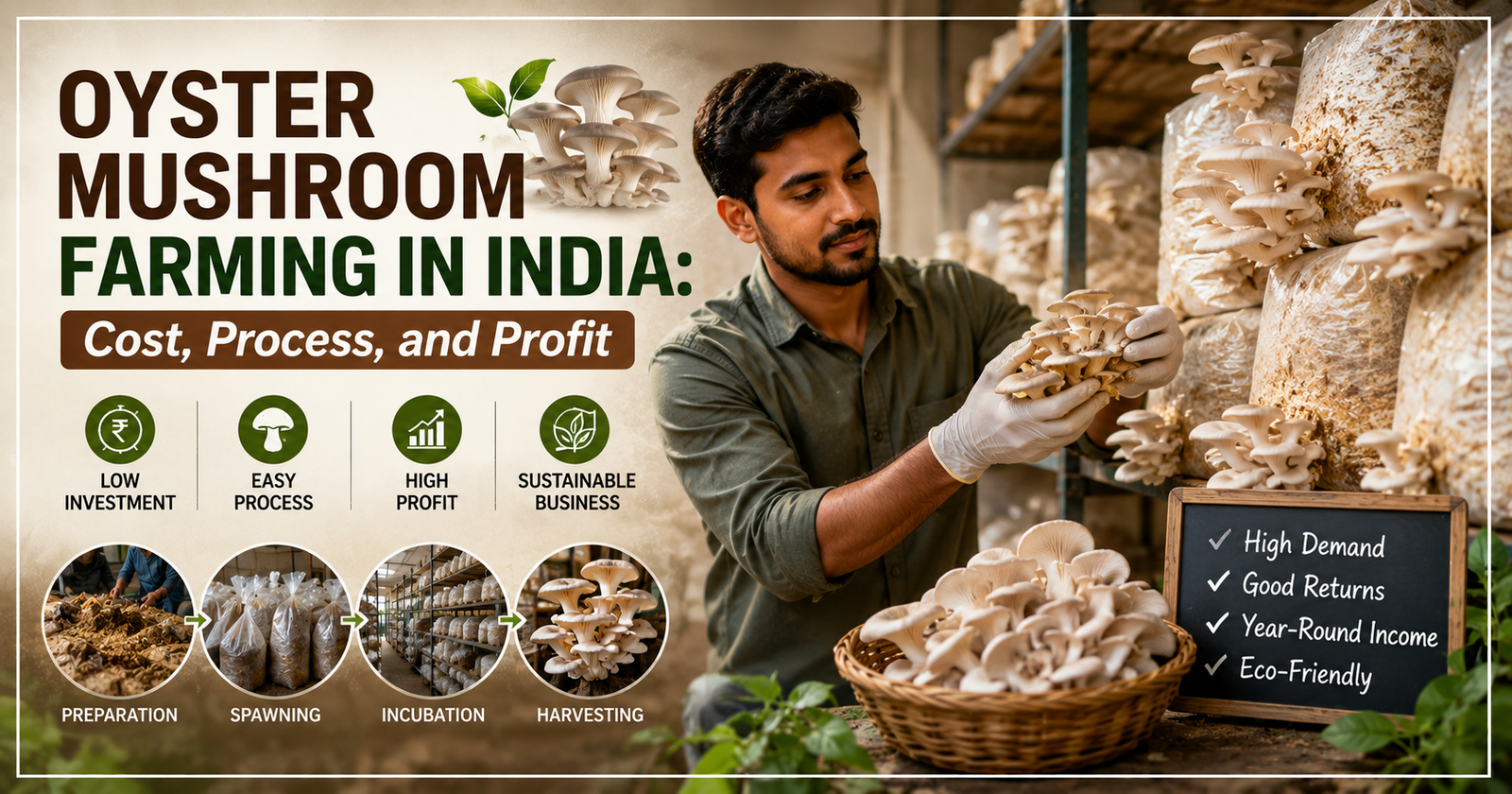
Oyster Mushroom Farming in India: Cost, Process and Profit
Posted on May 8, 2026
Oyster mushroom farming in India is becoming a popular low-investment farming business for farmers, homemakers, students, and small entrepreneurs. The main reason is simple: oyster mushrooms grow quickly, require less space, and can be cultivated with available agricultural waste (paddy straw, wheat straw, sugarcane bagasse, and dry leaves). For beginners planning to start a mushroom farming business, oyster mushroom cultivation is one of the easiest and most practical choices.
Oyster mushroom, also known as dhingri mushroom, is rich in protein, fibre, vitamins, and minerals. It is widely used in soups, curries, snacks, stir-fries, and health-focused diets. With the increasing demand for healthy food, organic products, and plant-based protein, the market for oyster mushrooms is growing in cities (as well as semi-urban areas).
Why Oyster Mushroom Farming Is a Good Business in India
Oyster mushroom farming does not require large amounts of land, expensive machinery, or heavy investment. A small room, clean water, quality spawn, and proper humidity control are enough to begin. Oyster mushrooms can be grown indoors, which makes them suitable for people who do not own farmland.
Another major advantage is the short crop cycle. Under good conditions, oyster mushrooms can be harvested within 30 to 45 days. ICAR-related mushroom cultivation studies say that oyster mushrooms can grow well on agricultural waste (such as wheat and paddy straw), and suitable temperature and humidity play an important role in production.
Oyster mushroom farming can be a profitable business in India for people who want to earn extra income, start an agri-business, or grow mushrooms on a small scale at home.
Basic Requirements for Oyster Mushroom Cultivation
To start oyster mushroom cultivation, you need a clean and shaded space. A small 100-200 sq. ft. room is enough for a beginner. The room should be protected from direct sunlight, dust, insects, and strong winds.
The main requirements include paddy straw or wheat straw, mushroom spawn, polythene bags, water drums, a sprayer, thermometer, hygrometer, racks, and basic cleaning materials. Good-quality mushroom spawn is important because poor-quality spawn can reduce production and increase the risk of contamination.
Humidity is one of the most important factors. Oyster mushrooms generally need high humidity during fruiting. The Directorate of Mushroom Research crop advisory suggests keeping the oyster mushroom growing room at 85–90% relative humidity.
Step-by-Step Oyster Mushroom Farming Process
The first step is substrate selection. Paddy straw and wheat straw are commonly used in India. The straw should be dry, clean, and free from fungus. Cut the straw into small pieces (of 2 to 4 inches) so it can absorb water properly.
Next, soak the straw in clean water for 6 to 8 hours. After soaking, pasteurize it using hot water or steam. Pasteurization helps kill harmful bacteria, insects, and unwanted fungi. After pasteurization, drain the straw and let it cool. The straw should be moist but not dripping water.
Once the substrate is ready, fill it into polythene bags in layers. Add one layer of straw, then sprinkle mushroom spawn, and repeat the process. Usually, 3-5% spawn is used based on the dry weight of the substrate. After filling, tie the bag properly and make small holes for air exchange.
Keep the bags in a dark or semi-dark room for the spawn run stage. During this period, the white mycelium spreads through the straw. This usually takes 12 to 20 days, depending on temperature, spawn quality, and cleanliness.
After the bags turn white, shift them to the fruiting area or open them slightly. Maintain humidity by spraying water on the floor and walls, not directly on young mushrooms. Proper ventilation is also important because oyster mushrooms need fresh air to develop good shape and size.
Small mushroom pins appear within a few days. These pins grow into harvestable mushrooms in 4 to 7 days. Harvest them when the edges of the cap are still slightly curled. Do not wait too long, as over-mature mushrooms lose quality and shelf life.
Oyster Mushroom Farming Cost in India
The cost of oyster mushroom farming depends on the scale, location, and setup type. For a small home-based mushroom farming setup, the investment can start from around ₹20,000 to ₹60,000. This includes racks, bags, spawn, straw, sprayer, basic tools, and room preparation.
For a slightly larger commercial mushroom farming unit, investment may range from ₹1 lakh to ₹5 lakh or more, depending on room size, cooling, humidifier, labour, packaging, and marketing. Recent business cost guides for mushroom farming in India show that equipment, tools, labour, and recurring expenses can vary widely based on farm size and location.
A simple small-scale cost estimate may look like this:
| Expense Item | Approx. Cost |
| Room cleaning and setup | ₹5,000 – ₹15,000 |
| Racks and shelves | ₹8,000 – ₹30,000 |
| Straw and raw material | ₹3,000 – ₹10,000 per cycle |
| Mushroom spawn | ₹2,000 – ₹8,000 per cycle |
| Bags, sprayer, and tools | ₹3,000 – ₹10,000 |
| Labour, electricity, and water | ₹5,000 – ₹20,000 per month |
These numbers are approximate and may change depending on your city, material quality, and production capacity.
Oyster Mushroom Farming Profit in India
Profit in oyster mushroom farming depends on yield, selling price, quality, and market connection. On average, 1 kg of dry straw can produce 600 grams to 1 kg of fresh oyster mushrooms if managed well. Some cultivation studies show that oyster mushroom yield can increase when the right substrate and proper growing conditions are maintained.
In India, fresh oyster mushrooms are commonly sold to local markets, vegetable shops, hotels, restaurants, health food stores, and direct customers. The selling price of oyster mushrooms usually ranges from ₹120 to ₹250 per kg, depending on the market location, freshness, and whether they are sold wholesale or retail. In some markets, farmers have reported selling oyster mushrooms for up to ₹200 per kg.
For example, if a small farmer produces 200 kg of oyster mushrooms per month and sells at ₹150 per kg, the monthly revenue can be around ₹30,000. After reducing raw material, labour, electricity, packaging, and transport costs, net profit may be around ₹12,000 to ₹20,000. With direct selling, better packaging, and regular restaurant clients, profit can increase.
Best Marketing Ideas for Oyster Mushrooms
Growing mushrooms is only one part of the business. Selling them properly is equally important. Start by approaching local vegetable vendors, organic stores, restaurants, cafes, hotels, and home chefs. You can also sell through WhatsApp groups, Instagram, local delivery apps, and farmers’ markets.
Packaging matters because mushrooms are delicate. Use clean trays, breathable packets, or small boxes. Add your farm name, harvest date, and storage instructions. If you want better profit, you can also sell value-added products like dried oyster mushrooms, mushroom powder, pickles, soup mix, and ready-to-cook mushroom packs.
Government Subsidy and Training
Farmers who want to apply for a mushroom farming subsidy in India should contact their state horticulture department, Krishi Vigyan Kendra, or check relevant National Horticulture schemes. Some state departments assist small mushroom production units; for example, Gujarat’s horticulture department lists support for low-cost/small-scale mushroom production units.
Before investing heavily, it is better to take training from a trusted agriculture institute, KVK, or an experienced grower. Training helps you understand hygiene, temperature, humidity, disease control, harvesting, and marketing.
Final Thoughts
Oyster mushroom farming in India is a practical and profitable agri-business idea for beginners. It requires low investment, less space, and a short production cycle. However, success depends on cleanliness, quality spawn, proper moisture, fresh air, and strong market planning.
Start with a small setup, learn the process properly, build a local customer base, and then expand gradually. With proper training and consistent quality, oyster mushroom cultivation can become a profitable income for farmers and new entrepreneurs in India.