
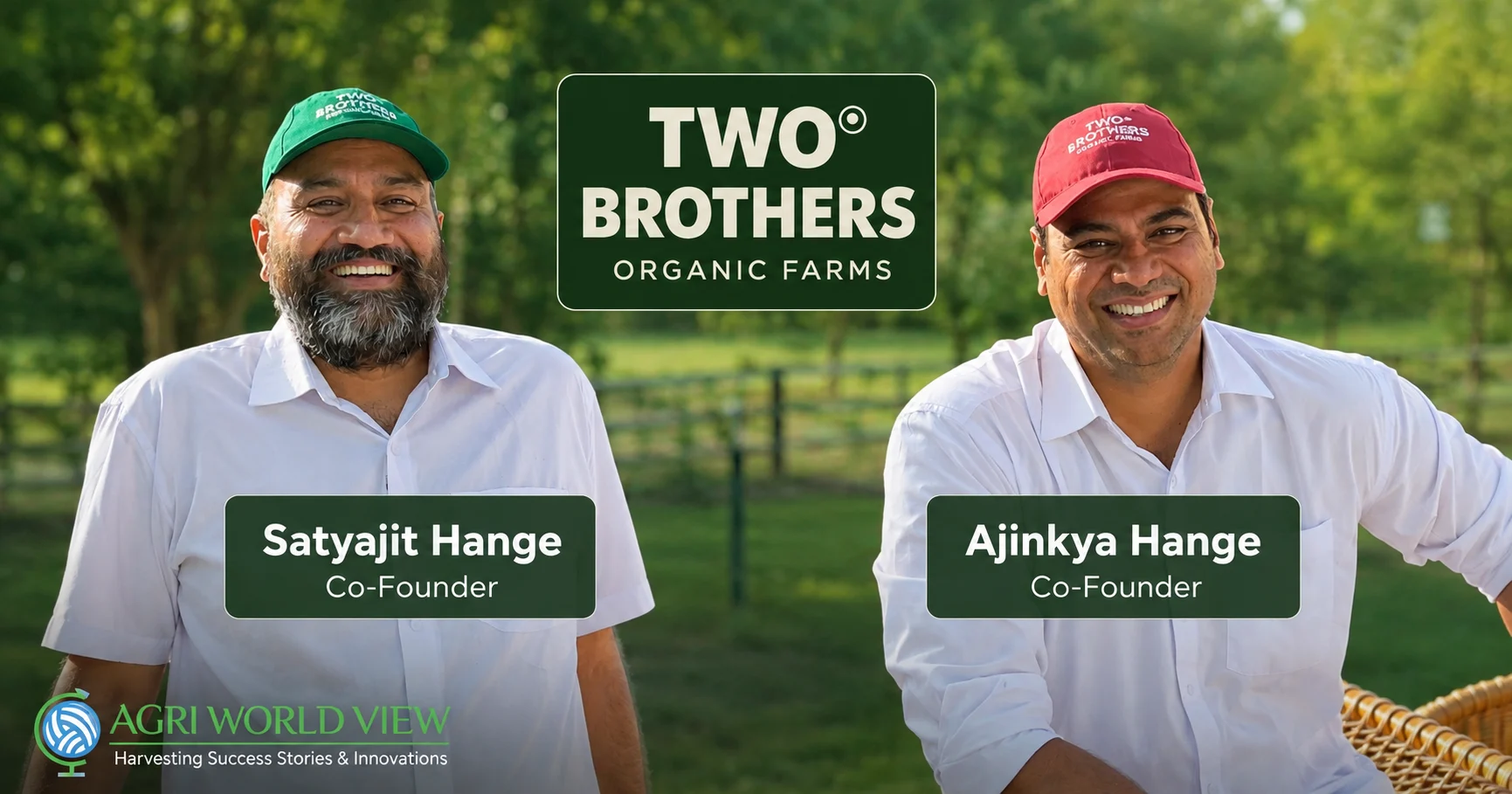
From Corporate Careers to Regenerative Farming: The Journey of Two Brothers Organic Farms
Posted on April 17, 2026
When Ajinkya Hange and Satyajit Hange walked away from stable banking careers, they were not chasing a business idea; they were responding to a deeper, more personal crisis rooted in India’s soil.
Raised between Pune’s structured academic life and the agrarian rhythms of Bhodani village in Maharashtra, the brothers grew up straddling two worlds. Educated at Bishop’s School, yet deeply connected to their ancestral land, their childhood was filled with memories of monsoon-soaked soil, traditional food, and a close-knit farming community. Those early experiences quietly shaped their worldview, though they wouldn’t fully understand it until much later.
Like many from farming families, they initially stepped away from agriculture, choosing the stability and prestige of corporate careers. Both spent nearly a decade in multinational banking environments, building financial acumen, discipline, and strategic thinking. Yet, despite professional success, something felt incomplete.
Between 2012 and 2014, that feeling evolved into a turning point. Deeply affected by the rising crisis of farmer distress in Maharashtra and increasingly disconnected from the realities of food and farming, they made a bold decision to walk away from corporate life. They sold their urban assets and returned to Bhodani, not with a business blueprint, but with a purpose.
“There were months when we failed more than we succeeded, but every time the soil came alive again, we knew we were on the right path.”
A Return to Roots, Not a Reinvention
The transition was far from romantic. The land they inherited had been subjected to years of chemical-intensive farming, leaving the soil degraded and unproductive. Early attempts at cultivation yielded disappointing results, and financial uncertainty became a constant companion.
But instead of retreating, the brothers chose to rebuild from the ground up.
They adopted regenerative farming practices focused on restoring soil health, biodiversity, and ecological balance. Composting, crop rotation, multi-cropping, and eventually the creation of a “food forest” became central to their approach. The transformation was gradual but profound. Earthworms returned, soil texture improved, and the land began to respond once again.
This wasn’t just farming; it was restoration.
Learning Farming from Scratch
Without formal agricultural training, their journey became one of continuous experimentation and learning. Every season brought new challenges: crop failures, unpredictable weather, and financial strain, but also new insights.
Their biggest shift was philosophical. Farming, they realized, was not a production system to be optimized for yield alone, but a living ecosystem that required patience, observation, and long-term thinking.
This mindset placed them at the intersection of a global shift toward sustainable agriculture, where soil health, biodiversity, and nutrition are increasingly seen as interconnected priorities.
Scaling with Purpose: Numbers Behind the Movement
What began as a deeply personal journey has evolved into a rapidly scaling enterprise with measurable impact.
Today, Two Brothers Organic Farms serves over 700,000 customers across 60+ countries. Building on its earlier Series A backing from Rainmatter Foundation, the brand has raised ₹110 crore in a Series B round led by 360 ONE Asset, with participation from Rainmatter Investments, Narotam Sekhsaria Family Office, and IGNITE Growth LLP. Having already crossed ₹250 crore ARR, the company is entering a strong new phase of expansion across manufacturing, international markets, and operational scale.
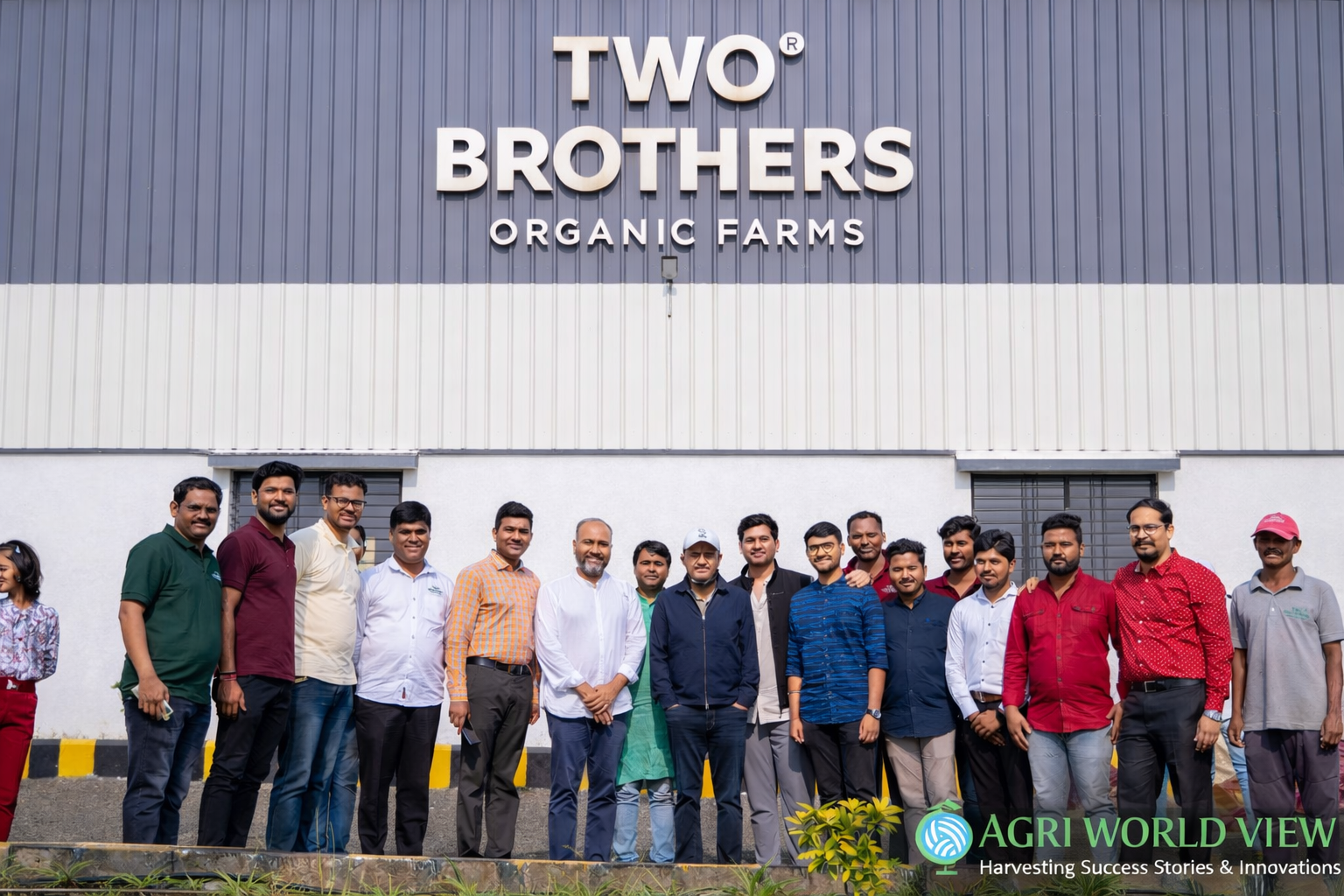
Its operations are supported by a 45,000 sq. ft. production facility and a growing network of farmers across India. Yet, despite this scale, the company remains anchored in its founding philosophy, putting soil health and farmer welfare at the center of the food system.
Empowering Farmers: A Quiet Revolution
At the heart of this growth lies a farmer-first model.
The organization has trained over 20,000 farmers and helped convert more than 1,000 acres into sustainable, regenerative farmland. Today, it actively collaborates with over 7,000 farmers across 20 states.
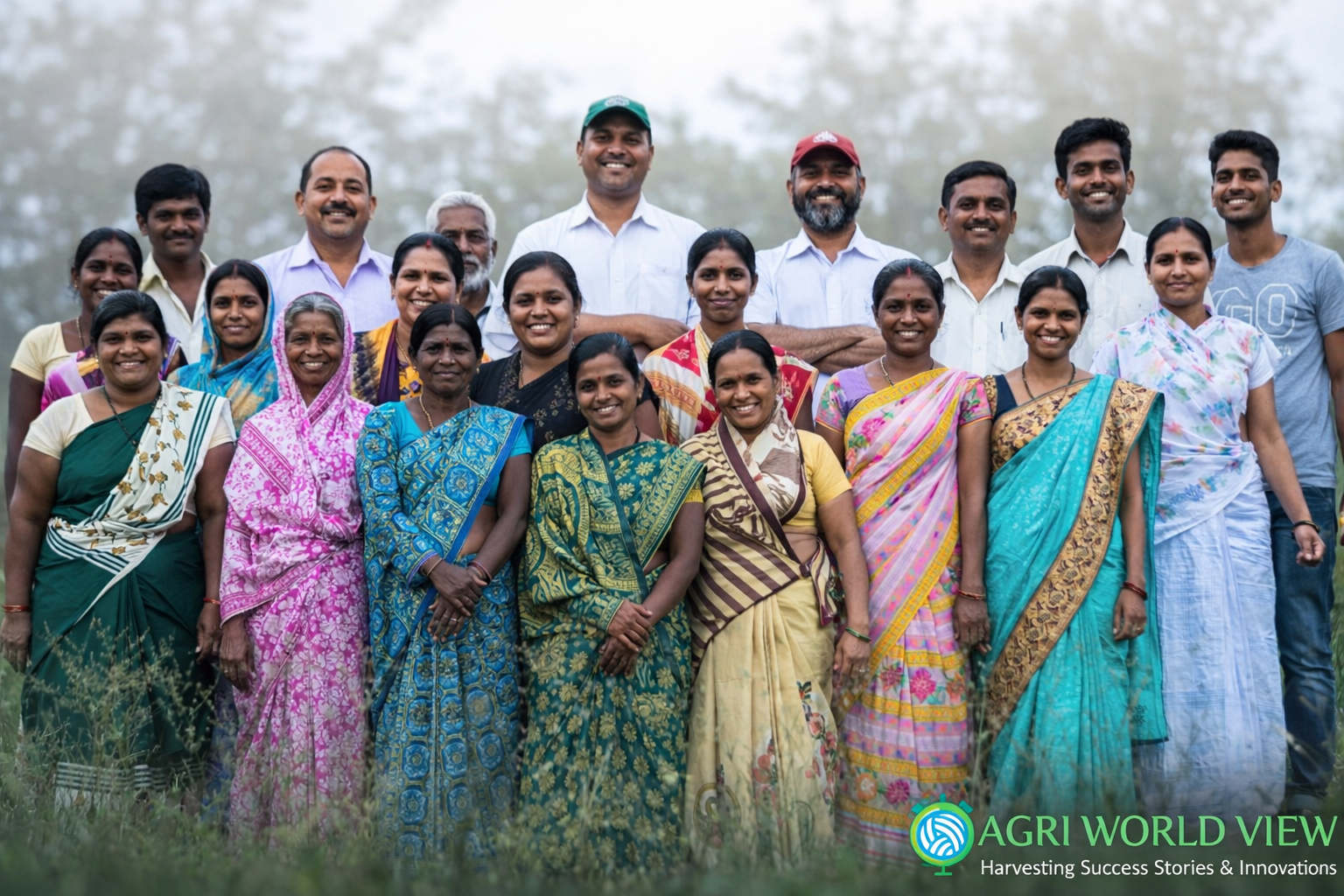
By providing training in regenerative practices, supporting organic certification, and creating direct market linkages, the model reduces dependency on chemical inputs while improving farmer incomes.
“Empowering farmers is not just about increasing yield, it is about restoring dignity, stability, and long-term sustainability.”
This decentralized approach reflects a larger vision, one where farmers are not just producers, but partners in building a healthier food ecosystem.
Inside the D2C Engine
A critical driver of the brand’s growth has been its direct-to-consumer (D2C) strategy.
Approximately 50% of revenue comes from its own digital platform, allowing the brand to maintain direct relationships with customers. Online marketplaces contribute an additional 15–20%, while quick commerce platforms such as Swiggy, Zomato, and Blinkit are emerging as high-growth channels.
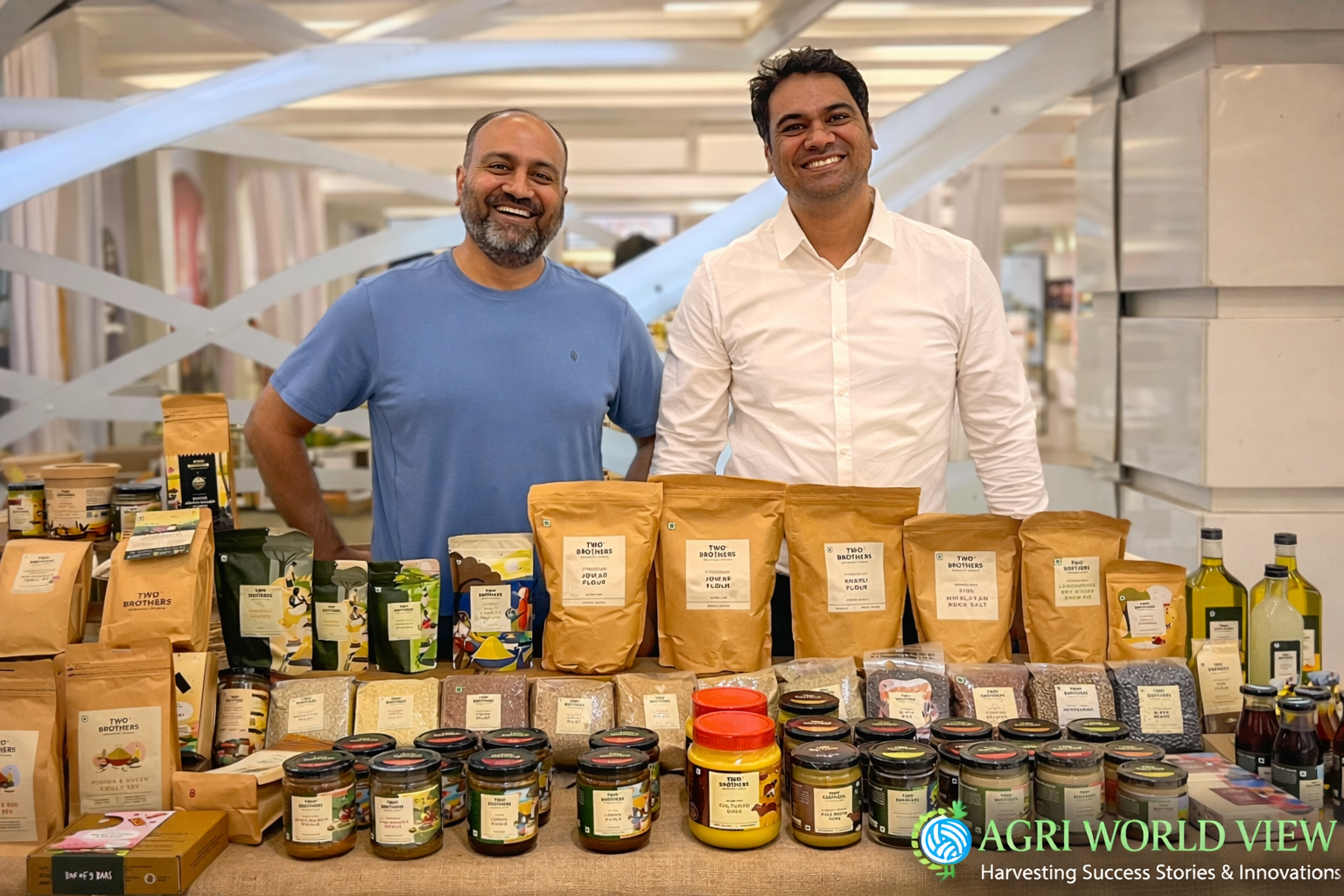
Quick commerce, in particular, has unlocked a new category of consumers: urban buyers who prioritize convenience but increasingly demand quality and authenticity. For the brand, these platforms serve not just as distribution channels but as discovery engines, often converting first-time buyers into loyal customers.
Offline retail currently contributes a smaller share, with presence in select premium outlets. However, the brand’s consistent participation in farmer markets for nearly a decade has played a critical role in building trust, gathering feedback, and fostering community.
Building Trust in a Skeptical Market
As awareness around food quality grows, so does skepticism. Consumers today are more informed and more questioning than ever before.
Recognizing this shift, the brand has built its communication strategy around transparency and education. With a strong digital presence, including over 380,000 followers on Instagram, it leverages storytelling to bridge the gap between farmers and consumers.
Campaigns such as “Know Your Farmer” and “Food Heals” focus on real people, real processes, and real impact. Collaborations with chefs and nutritionists further reinforce the brand’s credibility, making conscious eating both aspirational and accessible.
Traceability: Rebuilding Trust in Food
In a fragmented food system, traceability has emerged as a critical differentiator.
Currently, multiple of the brand’s products are fully traceable to specific farms and farmers, with ongoing efforts to extend this across the entire portfolio. Through in-house systems and data-driven processes, consumers are gradually being given visibility into where their food comes from, how it is grown, and who grows it.
This commitment reflects a broader industry shift where transparency is no longer optional, but expected.
Technology Meets Tradition
While deeply rooted in traditional practices, the brand also embraces modern technology.
Production methods such as cultured bilona ghee-making, stone grinding, and cold pressing ensure that nutritional integrity and authenticity are preserved. At the same time, backend operations leverage AI and analytics to improve demand forecasting, inventory management, and quality control.
This blend of tradition and technology represents a new paradigm in agriculture, one that respects the past while preparing for the future.
From Bhodani to the World
What began in a small village in Maharashtra is now reaching global markets.
With over 25,000 customers in the United States and a growing presence in the Middle East, the brand is steadily expanding its international footprint. The establishment of a Dubai office and U.S. registration mark significant milestones in this journey.
However, expansion is not just about scale; it is about consistency. Ensuring that the same values of quality, authenticity, and transparency are upheld across markets remains a central focus.
Changing the Perception of Farming
Beyond business success, the journey of the Hange brothers is helping reshape how farming is perceived.
For decades, agriculture in India has often been viewed as a fallback option. Today, that narrative is evolving. With the right combination of knowledge, infrastructure, and market access, farming is emerging as a viable and aspirational career.
This shift is critical for the future of Indian agriculture, particularly as younger generations seek purpose-driven careers.
A Movement, Not Just a Model
At its core, Two Brothers Organic Farms represents more than a business; it is a movement.
It challenges conventional notions of food production and consumption. It raises fundamental questions about what we eat, how it is grown, and the systems that sustain it.
As India navigates its agricultural transformation, stories like this offer more than inspiration; they offer direction.
They remind us that the future of food may not lie in reinvention, but in restoration of soil, systems, and trust.