
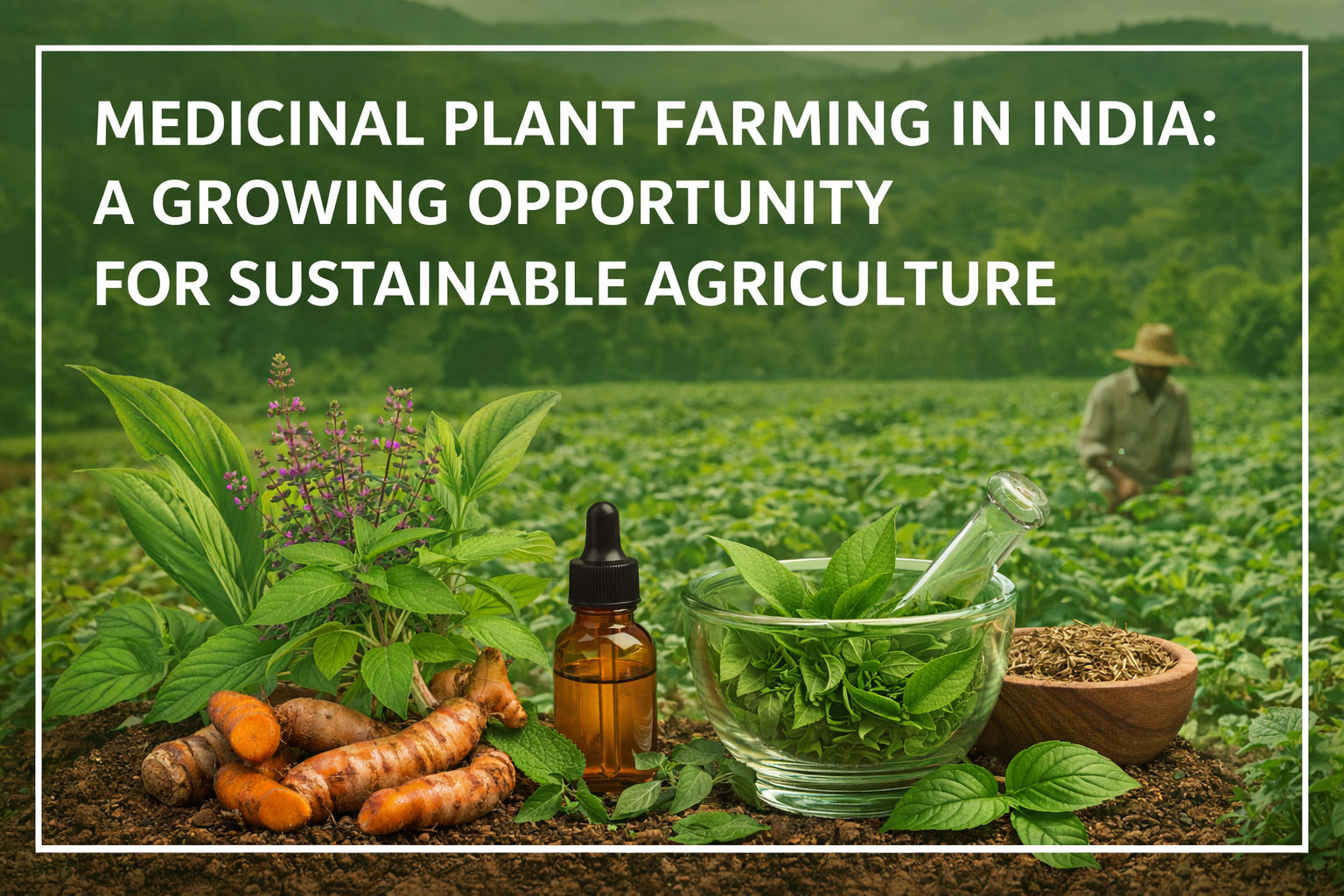
Medicinal Plant Farming in India
Posted on February 12, 2026
India has always had a deep connection with medicinal plants. From Ayurveda to home remedies passed down through generations, the country’s traditional healing systems rely heavily on herbs and natural ingredients. Today, this ancient knowledge is meeting modern demand, creating a strong business opportunity for farmers. Medicinal plant farming in India is no longer limited to forest collection or small backyard cultivation; it has become a structured, profitable, and export-oriented sector.
With rising global interest in natural healthcare, immunity-boosting products, herbal cosmetics, and organic supplements, medicinal plant cultivation offers both economic and ecological benefits. For farmers looking to diversify beyond traditional crops, this segment provides a sustainable alternative.
Why Medicinal Plant Farming Is Gaining Popularity
Several factors are driving the growth of medicinal plant cultivation in India:
- – Rising demand for herbal products in India and international markets
- – Expansion of Ayurvedic, Unani, Siddha, and Homeopathy industries
- – Increased consumer preference for natural and chemical-free products
- – Government support through the National Medicinal Plants Board (NMPB) and related schemes
- – Better price realization compared to many traditional crops
Unlike conventional crops that depend heavily on MSP or volatile market prices, medicinal plants often operate through contract farming or direct tie-ups with pharmaceutical companies. This provides better predictability and income stability.
Suitable Climatic Conditions and Soil Requirements
One of the strengths of medicinal plant farming in India is its adaptability. Different species grow across varied agro-climatic zones (from the Himalayan regions to the tropical plains).
- – Ashwagandha thrives in dry regions with well-drained sandy loam soil.
- – Aloe Vera performs well in arid and semi-arid conditions.
- – Tulsi (Holy Basil) grows across India (with moderate rainfall).
- – Sarpagandha prefers subtropical climates with good moisture.
- – Safed Musli requires warm and humid conditions.
Most medicinal plants do not demand highly fertile soil. In fact, excessive chemical fertilization can reduce medicinal properties. This makes them suitable for organic and low-input farming models.
Popular Medicinal Plants Cultivated in India
Here are some high-demand medicinal crops:
1. Ashwagandha
Used for stress relief, immunity, and strength enhancement. It has strong export demand and relatively low cultivation costs.
2. Aloe Vera
Widely used in cosmetics, skin care, and health drinks. Easy to grow and suitable for drought-prone areas.
3. Tulsi
Used in herbal teas, oils, and Ayurvedic medicines. It also has strong domestic consumption.
4. Safed Musli
High-value crop used in pharmaceutical formulations and health supplements.
5. Brahmi
Known for improving memory and cognitive function. It requires moist conditions and has a consistent demand.
Each crop has its own cultivation cycle, harvest time, and processing requirements. Therefore, crop selection should depend on local climate, soil type, and available market linkages.
Investment and Profit Potential
Medicinal plant farming can be started on small landholdings, making it suitable for marginal and small farmers. The investment varies depending on the crop:
- – Low-investment crops: Tulsi, Ashwagandha
- – Moderate investment crops: Aloe Vera
- – High-value crops: Safed Musli, Sarpagandha
Profit margins can be significantly higher than traditional cereals, especially when farmers adopt contract farming or direct marketing models. However, profitability depends on:
- – Quality planting material
- – Proper drying and post-harvest handling
- – Market linkage and buyer agreements
- – Certification (organic or Good Agricultural Practices)
Unlike perishable vegetables, many medicinal plants can be dried and stored, reducing post-harvest losses.
Government Support and Schemes
The Indian government promotes medicinal plant cultivation through several initiatives:
- – National Medicinal Plants Board (NMPB) subsidies
- – State horticulture missions
- – Financial assistance for nurseries and processing units
- – Training programs for farmers
These schemes aim to reduce dependence on wild collection and promote scientific cultivation methods. Farmers are encouraged to approach local agriculture departments for updated scheme details.
Challenges in Medicinal Plant Farming
While the sector is promising, it is not without challenges:
- – Lack of proper market information
- – Price fluctuations for certain species
- – Limited awareness among farmers
- – Dependence on middlemen in some regions
- – Need for proper post-harvest processing knowledge.
Many farmers enter this field after hearing about “high profits” but without understanding demand cycles or buyer requirements. Unlike food crops, medicinal plants must meet strict quality standards regarding active ingredient content.
Success in this sector requires planning, technical knowledge, and strong marketing support.
Importance of Market Linkage
Market connection is more important than production volume in medicinal plant farming. Farmers should:
- – Secure buyers before large-scale cultivation
- – Explore contract farming opportunities.
- – Join Farmer-Producer Organizations (FPOs)
- – Consider cooperative marketing models.
Export markets in the US, Europe, and Southeast Asia have strict quality norms. Meeting these standards can open high-value opportunities but requires consistency and certification.
Sustainable and Eco-Friendly Farming Model
Medicinal plant farming supports ecological balance:
- – Encourages organic practices
- – Reduces chemical fertilizer use
- – Supports biodiversity
- – Promotes soil health
In tribal and forest regions, it also creates livelihood opportunities while reducing illegal wild harvesting. When done responsibly, this sector supports both economic growth and environmental conservation.
Future Outlook of Medicinal Plant Farming in India
The global herbal market continues to expand, and India is uniquely positioned due to its biodiversity and traditional knowledge systems. Rising awareness about preventive healthcare, immunity, and plant-based wellness products ensures long-term demand.
Additionally, growth in herbal cosmetics, nutraceuticals, and plant-based pharmaceuticals is creating new business avenues. With proper research, value addition, and branding, Indian farmers can move beyond raw material supply and explore processing and product development.
The future of medicinal plant farming will depend on:
- – Scientific cultivation practices
- – Digital market access
- – Farmer training and awareness
- – Strengthening FPO networks
- – Value-added processing at the local level
Conclusion
Medicinal plant farming in India is more than just an alternative crop; it represents a shift toward sustainable agriculture, better income diversification, and alignment with global wellness trends. For farmers willing to invest time in learning cultivation techniques and understanding market dynamics, this sector offers real potential.
However, success does not come from hype. It comes from research, buyer connections, and consistent quality production. As awareness grows and structured support systems improve, medicinal plant cultivation can become a strong pillar of India’s agricultural economy.
For deeper insights, practical farming guidance, and updated agricultural trends, platforms like AgriWorldView play an important role in educating and empowering farmers across India. With the right knowledge and planning, medicinal plant farming can turn into a profitable and sustainable journey for many agricultural families.